Russian Priests Blessing Cross d.1791
An exceptional Russian Orthodox priest’s blessing and reliquary cross, dated 1791, conceived on a commanding altar scale and richly worked in silver-gilt.
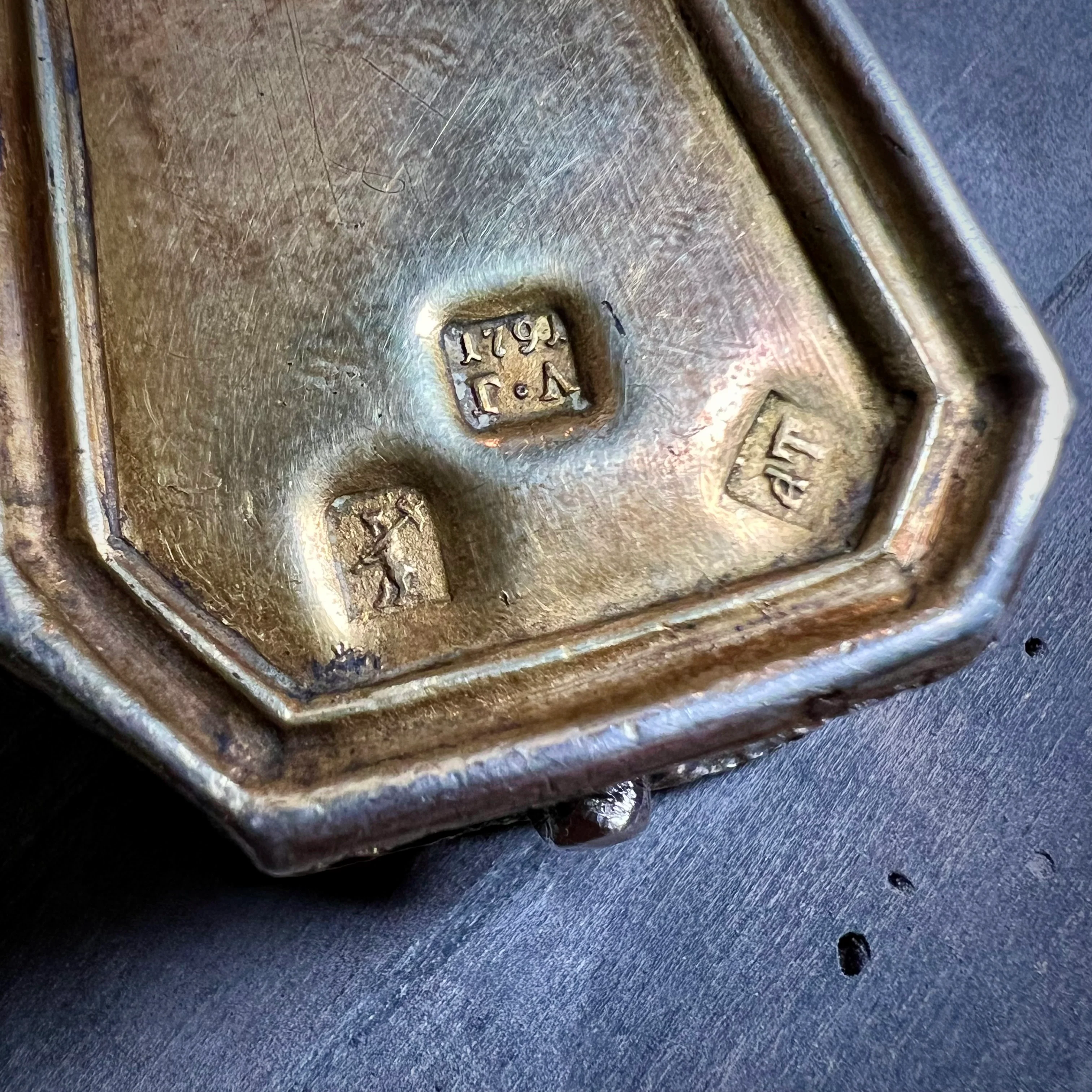
The cross is executed in solid 84-standard silver (zolotniki), subsequently fire-gilded, in keeping with late-18th-century Russian ecclesiastical practice. This high silver content (.875) was the prescribed Imperial standard, while the gilding served both symbolic and practical purposes: enhancing legibility of the relief in candlelit interiors, protecting the silver from handling, and visually harmonising the cross with icon frames and altar furnishings. The surviving gilding, particularly retained within the recesses of the relief, is entirely consistent with period fire-gilding and liturgical use.
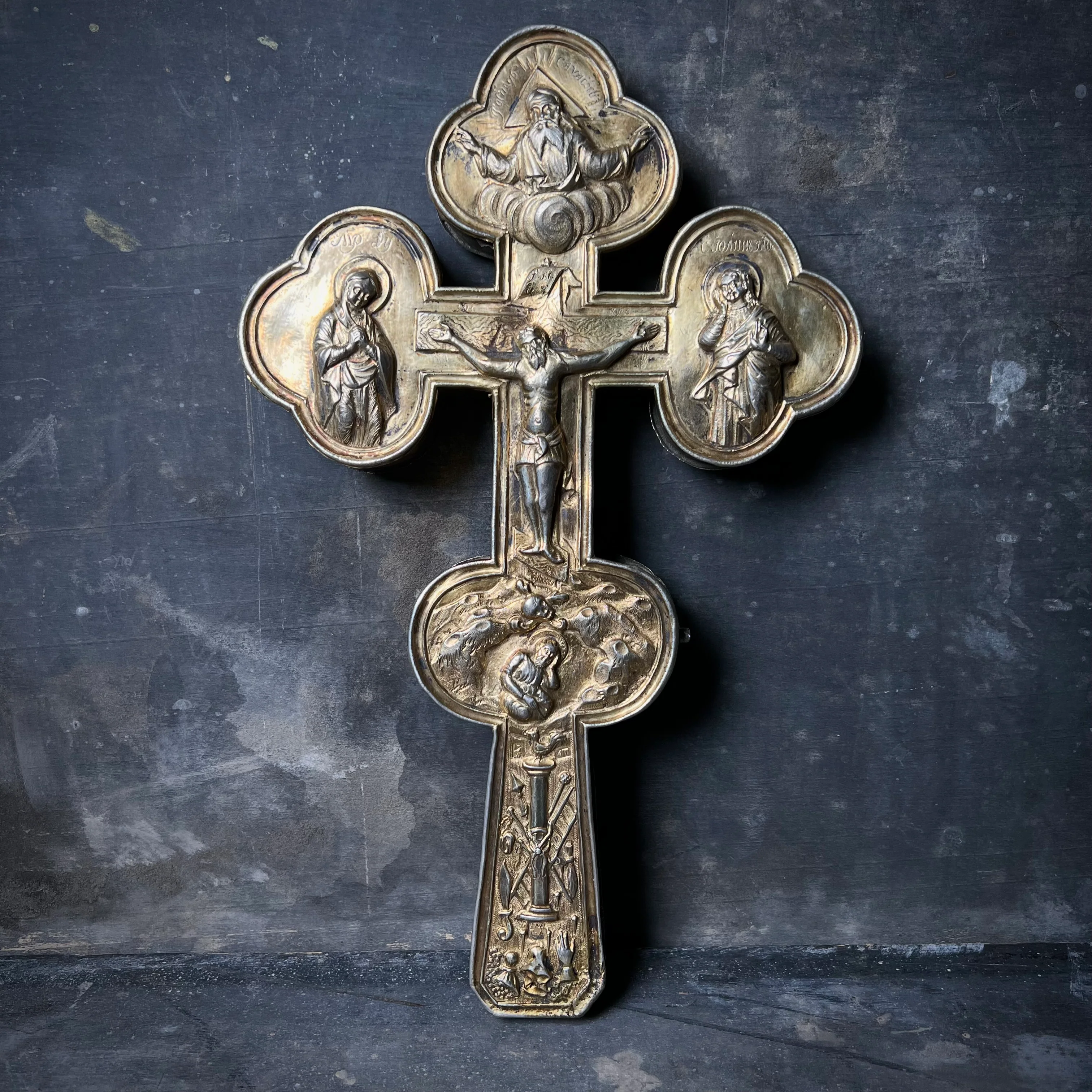
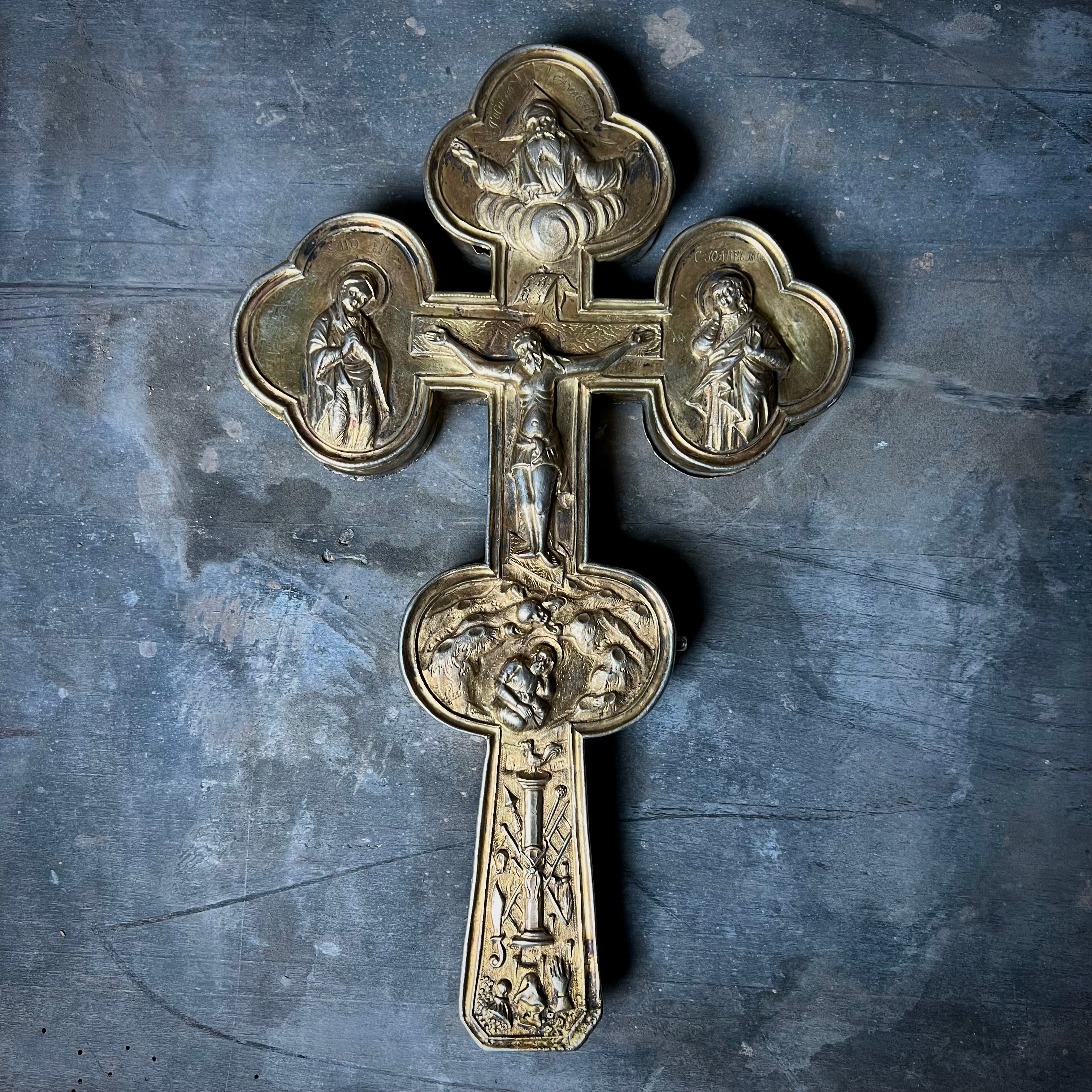
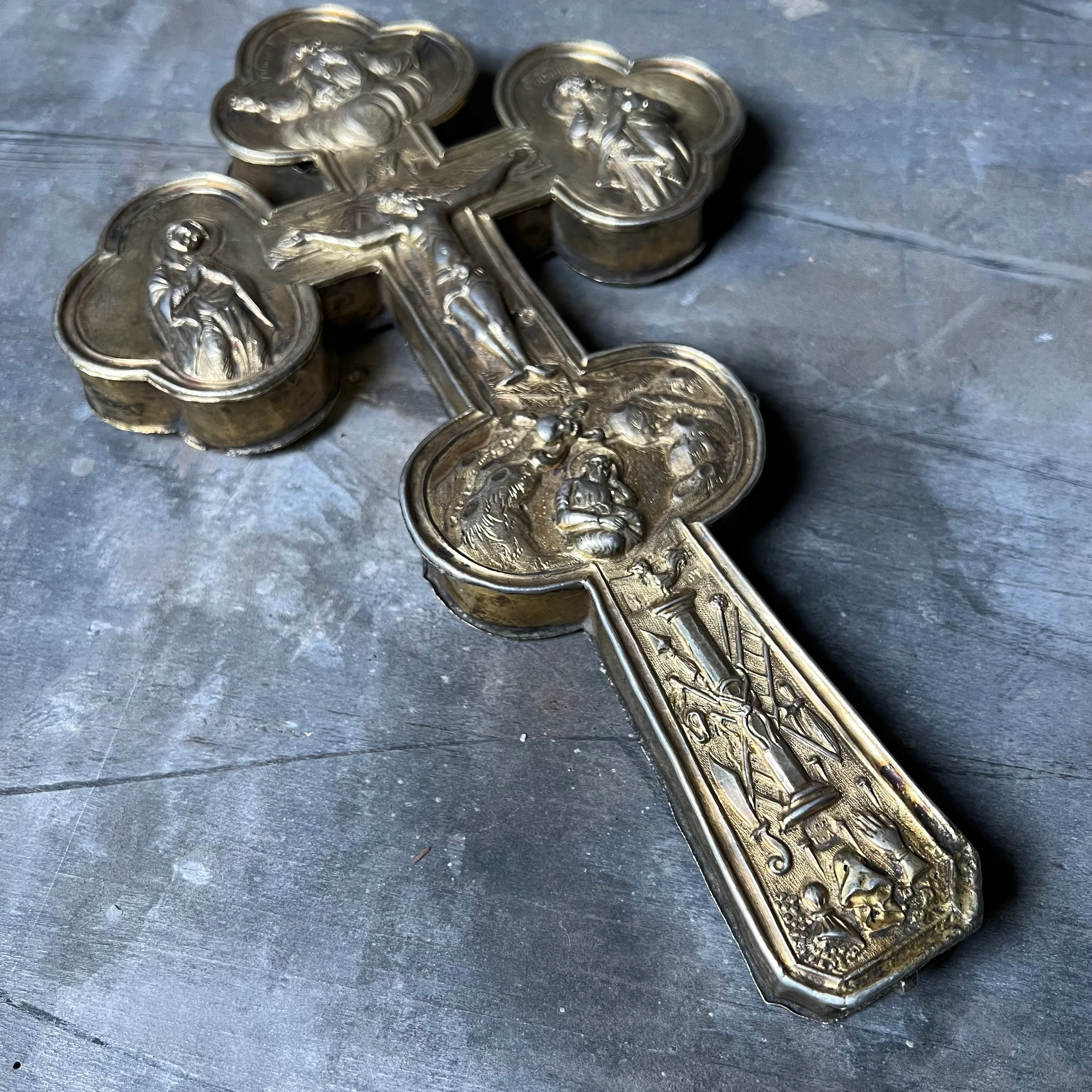
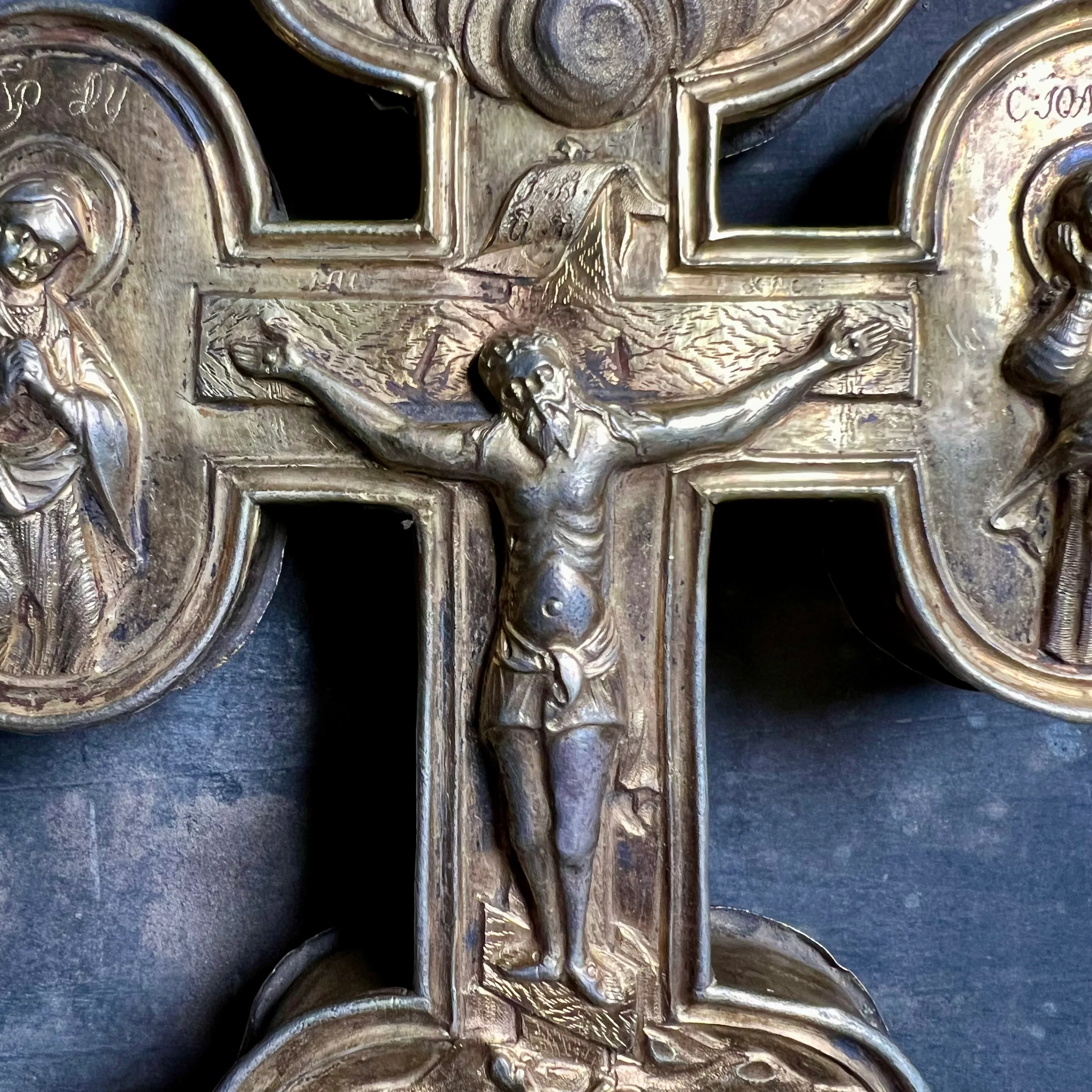
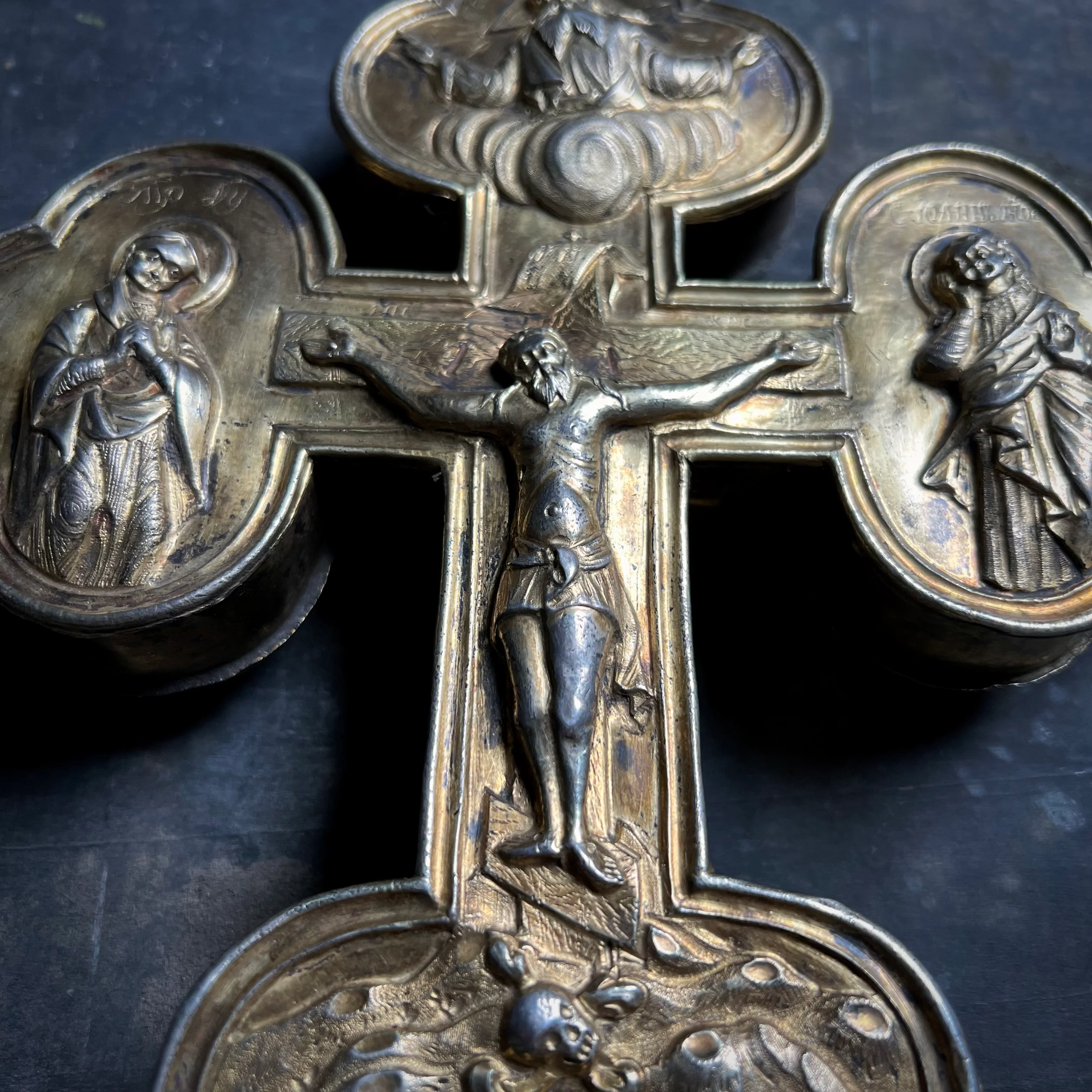
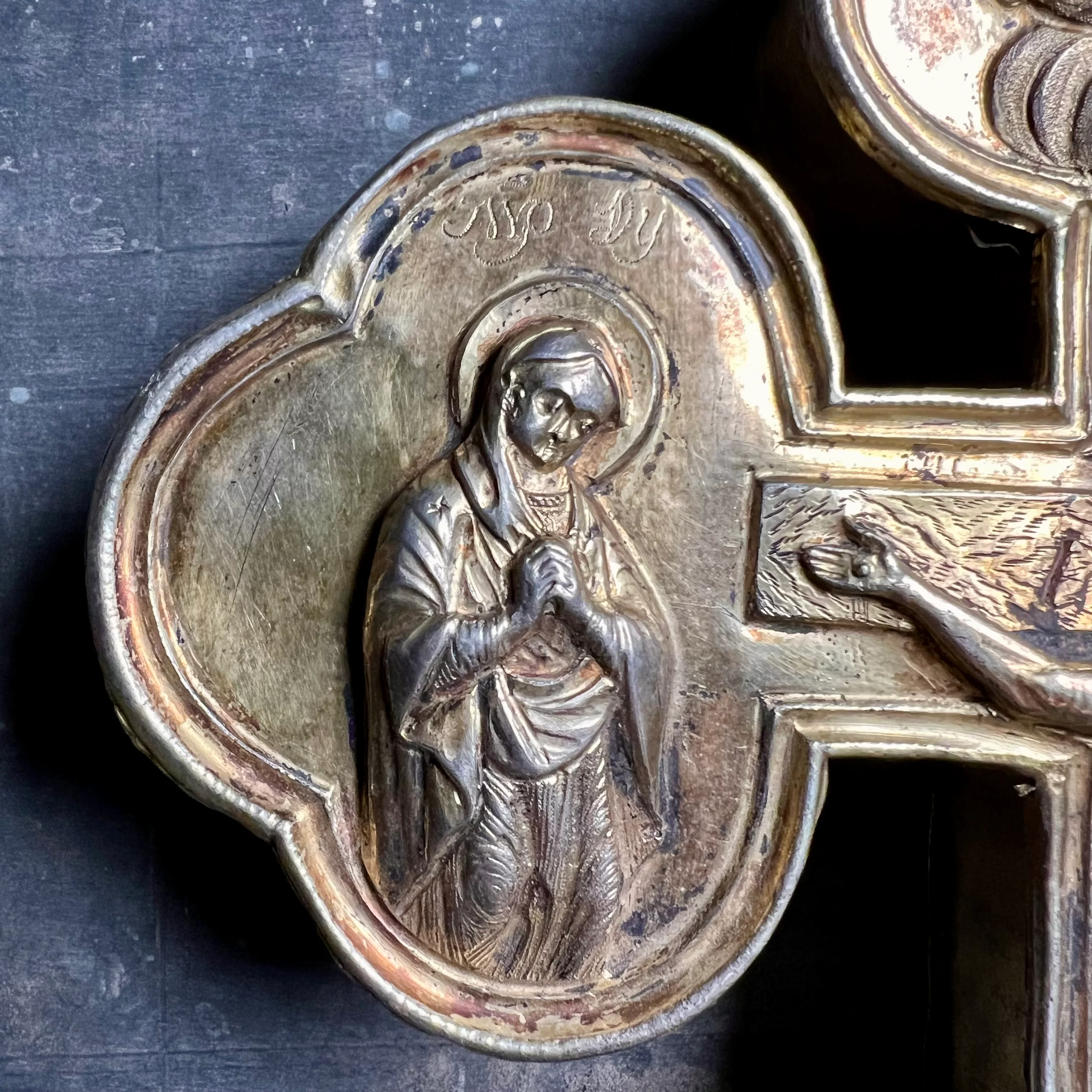
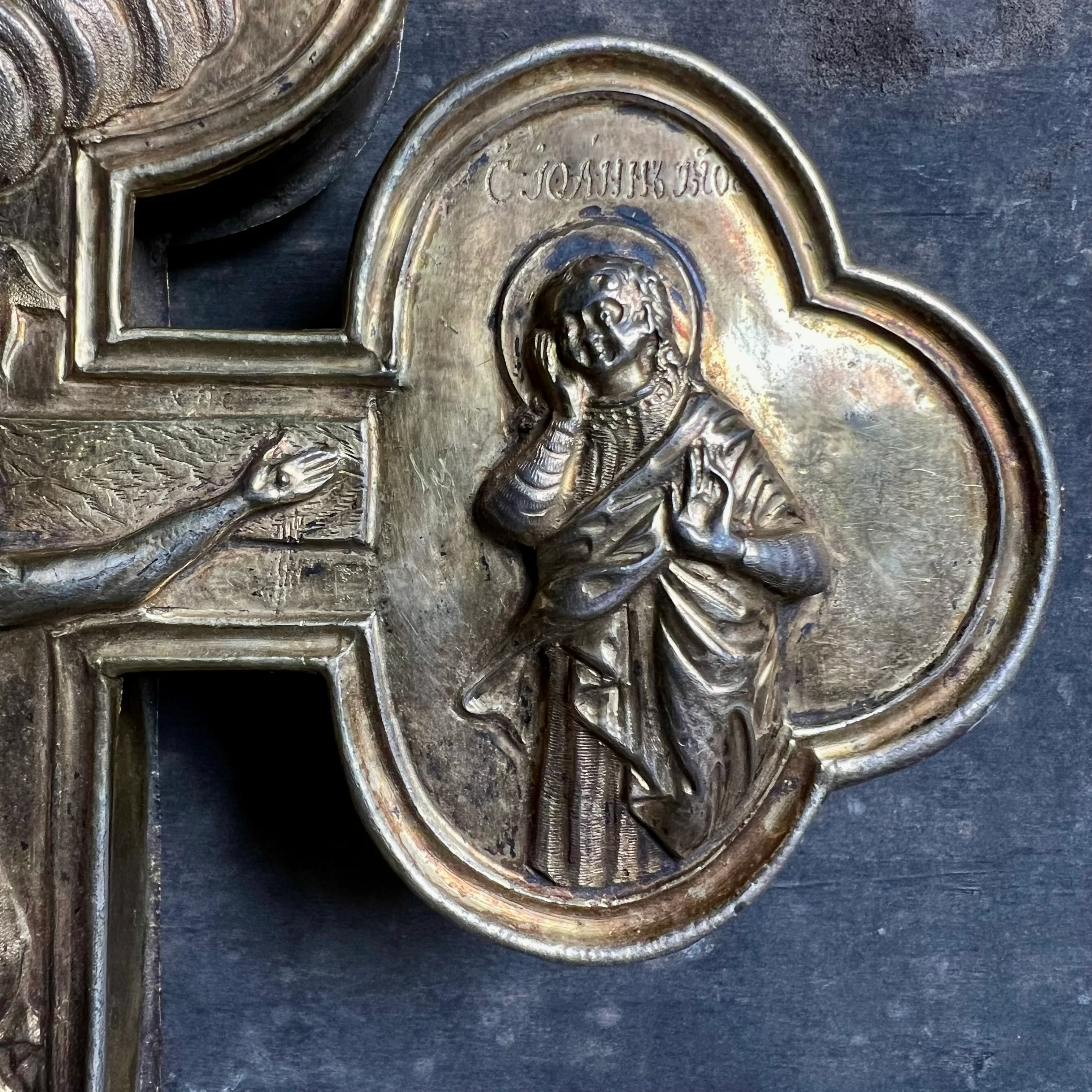
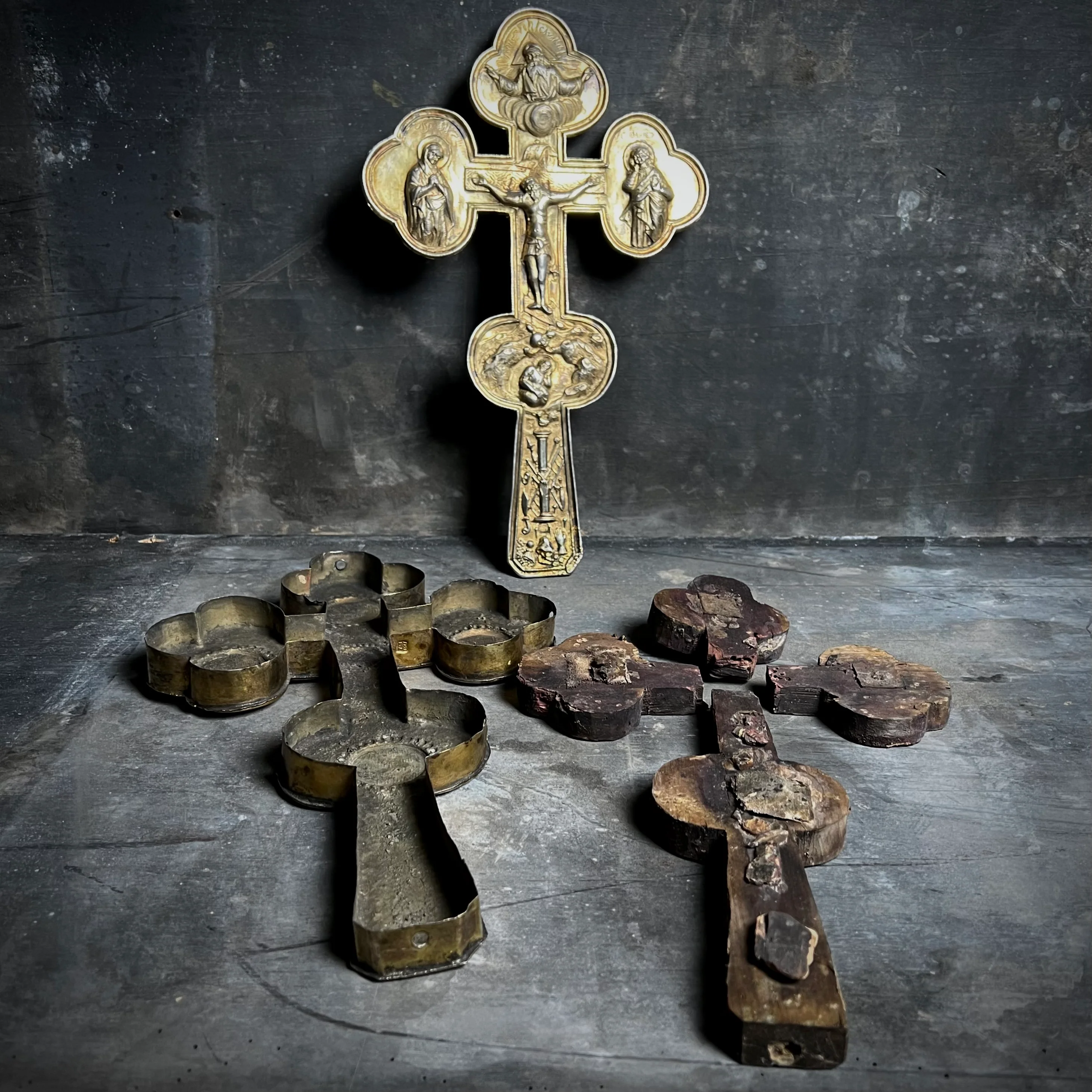
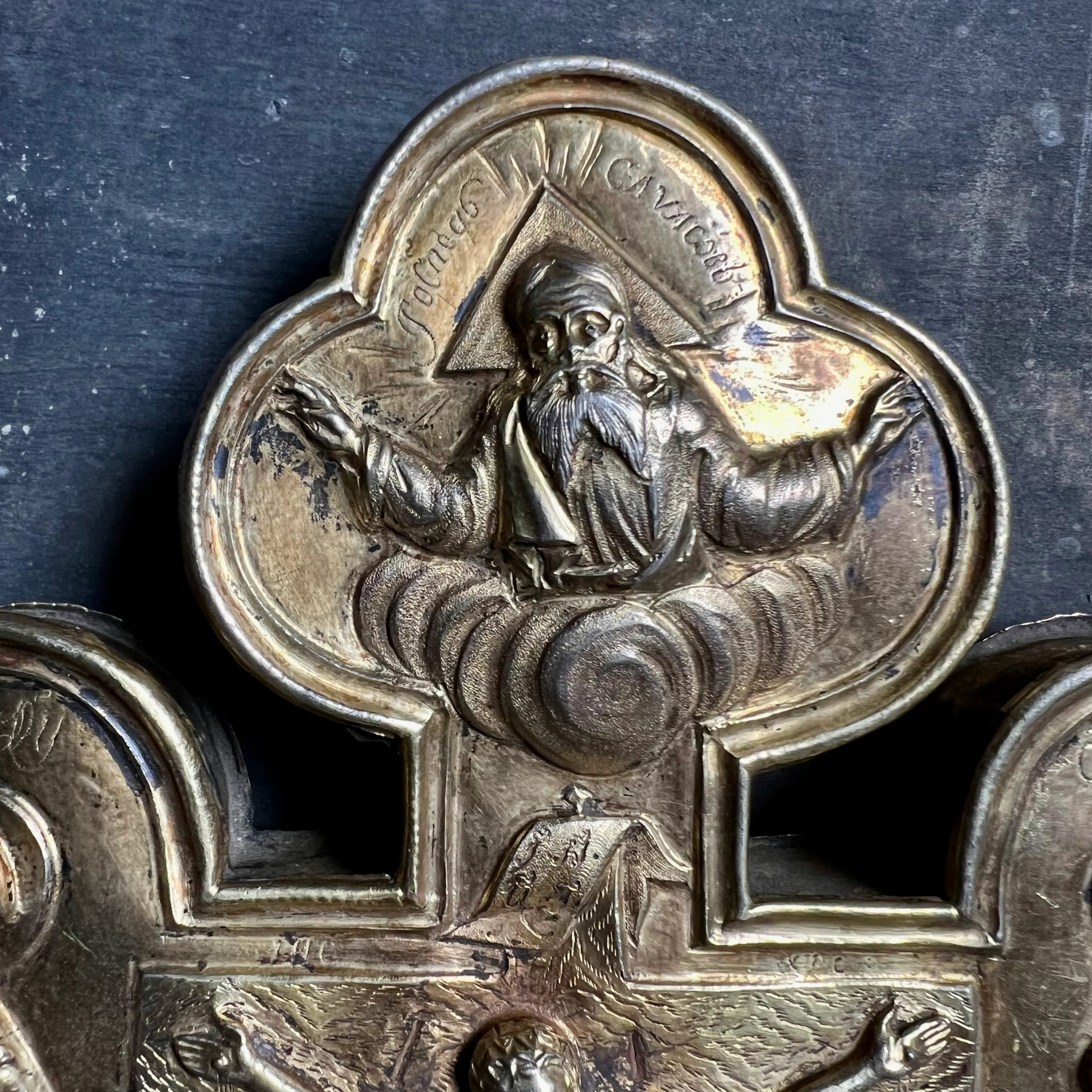
At the centre is the Crucifixion, with Christ rendered in deeply modelled relief. The Madonna stands to the left, and St Mary Magdalene to the right. Above, God the Father appears within a triangular halo, symbolising the Holy Trinity. The cross is dated to the reign of Catherine II of Russia, both she and Christologically referenced figures forming part of the wider Romanov dynastic and Orthodox tradition of patronage.
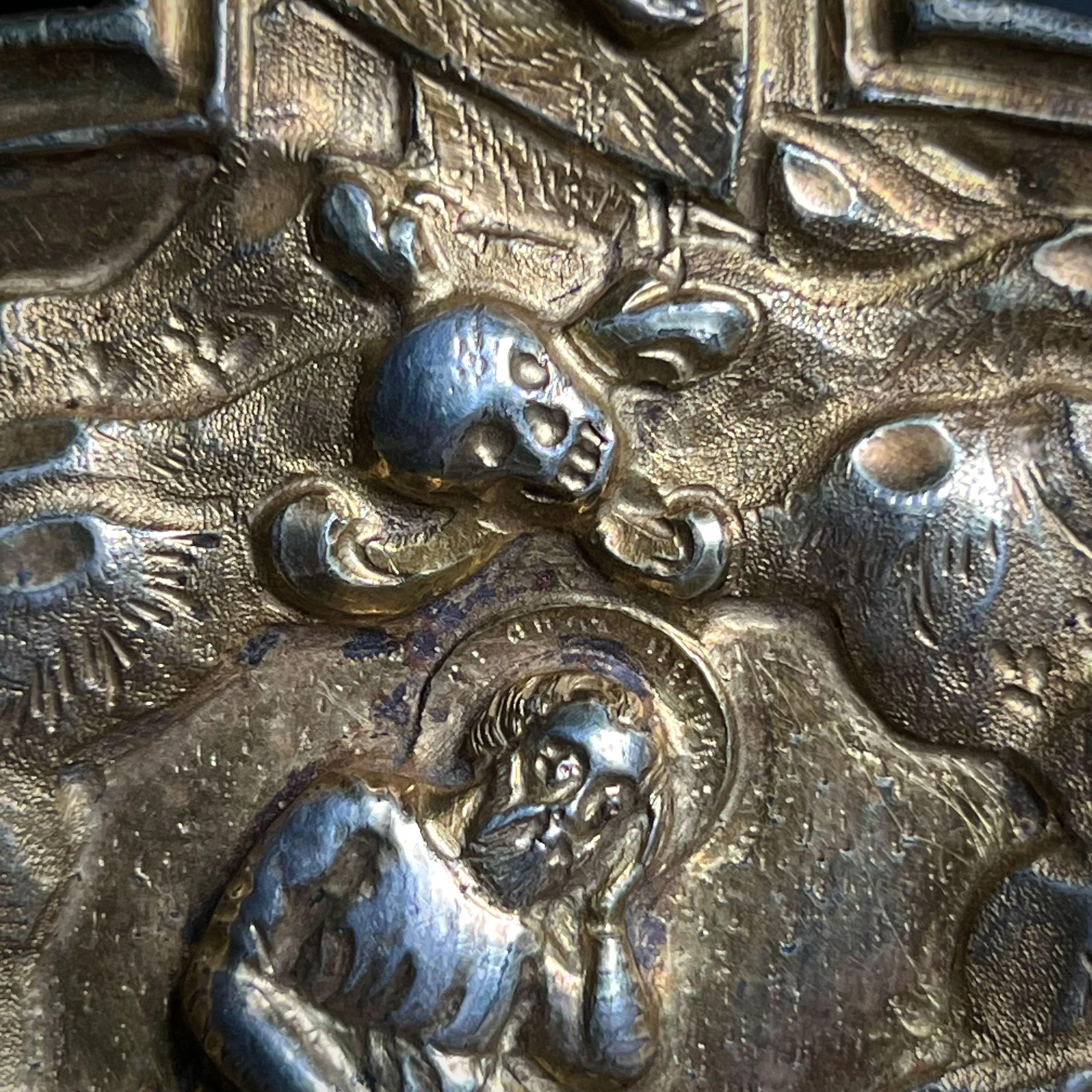
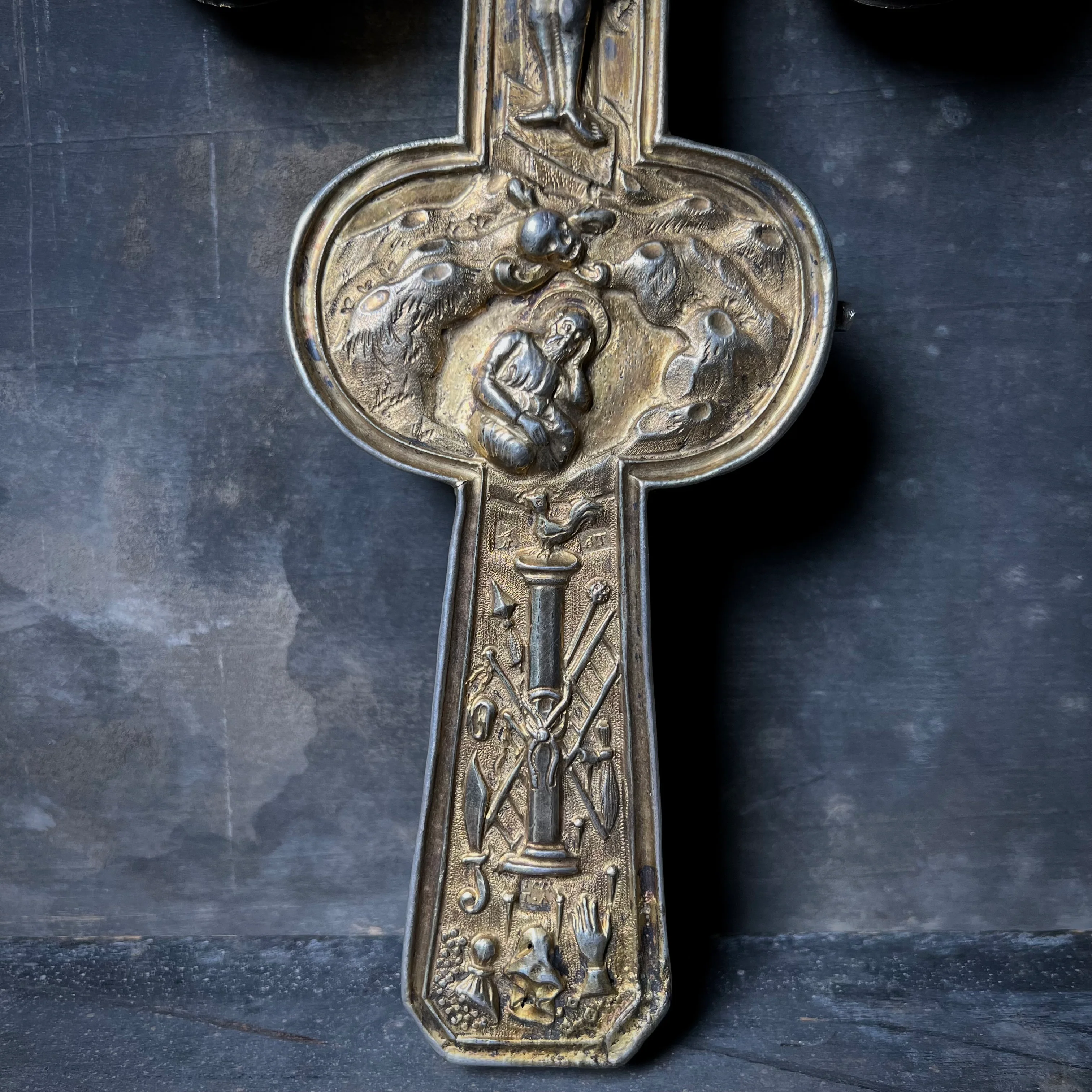
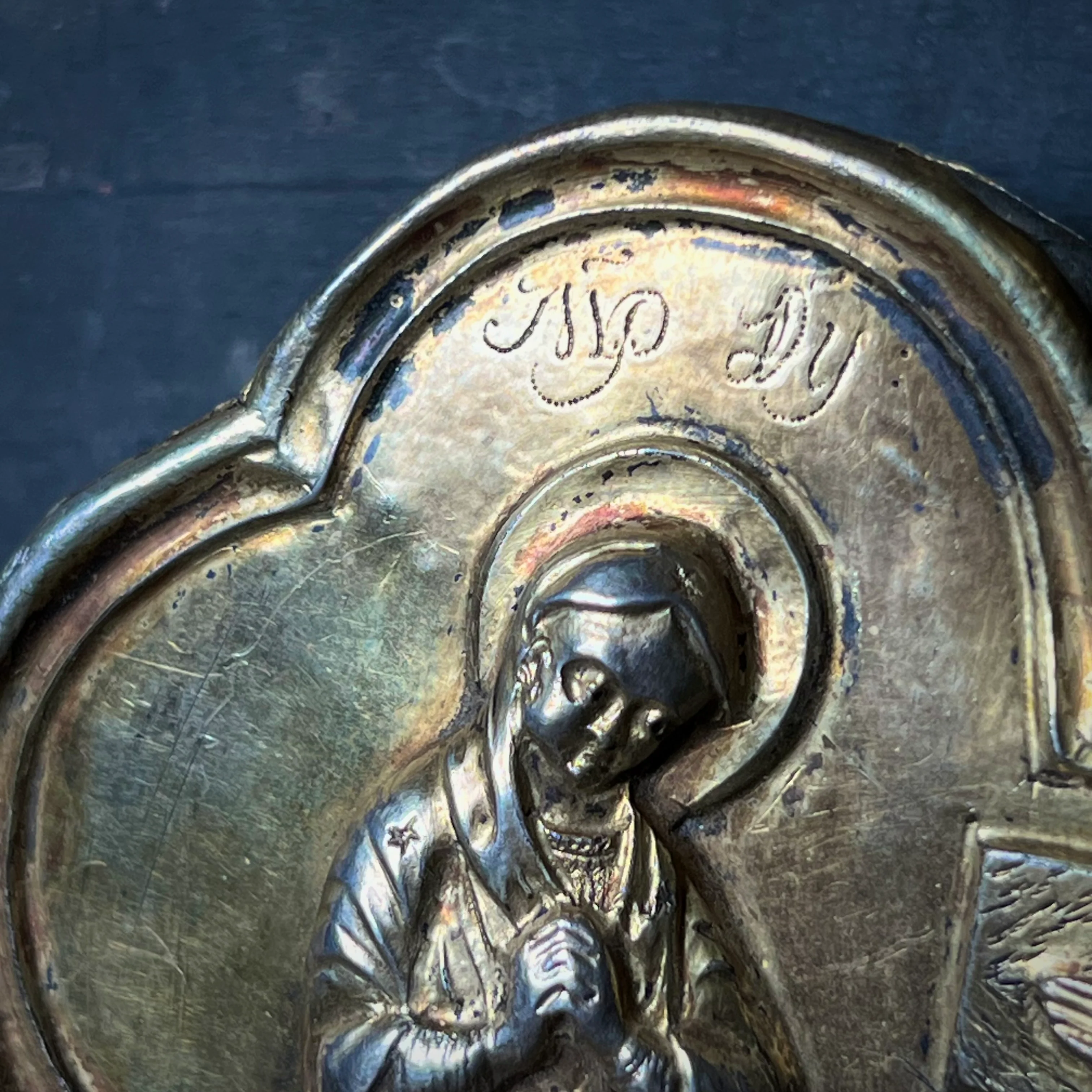
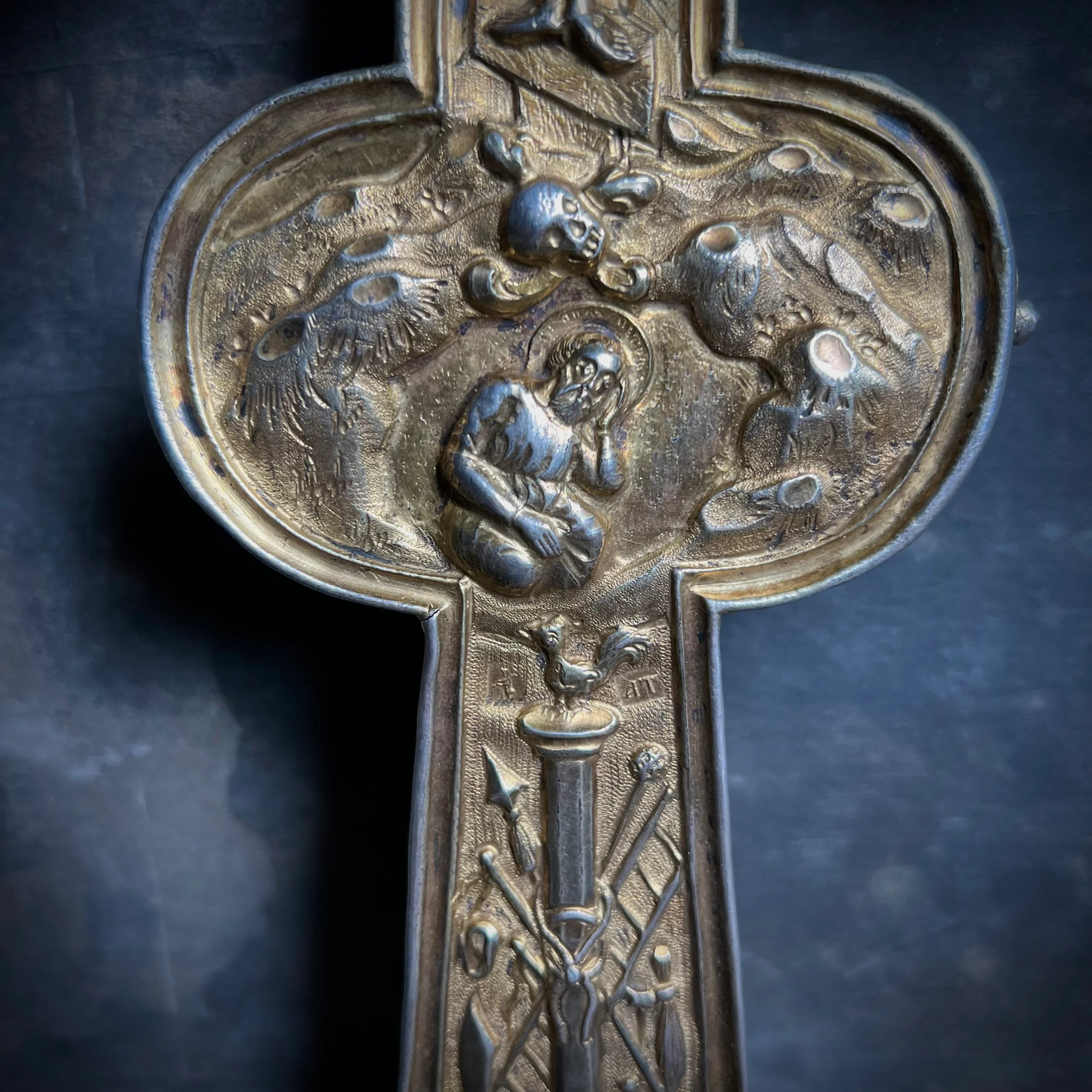
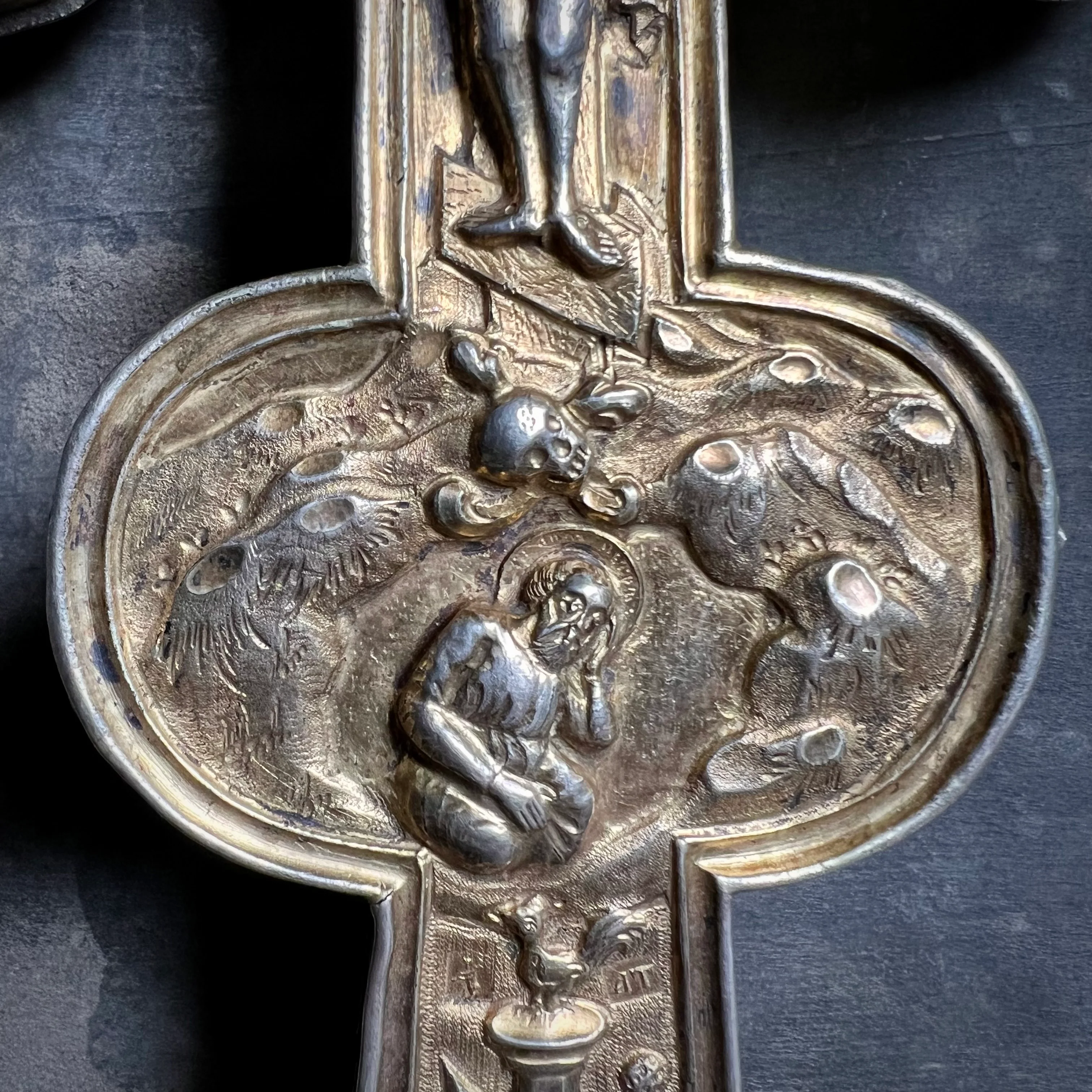
Beneath Christ’s feet lies a skull, emblematic of mortality and the redemption of Adam, while below this St Peter is shown beside a cockerel, referencing the threefold denial. The lower section of the cross is densely populated with symbolic instruments of the Passion, including the Roman soldier’s sword, the spear of destiny, and a raised hand, among other signs, forming a complex visual theology intended for contemplation and blessing.
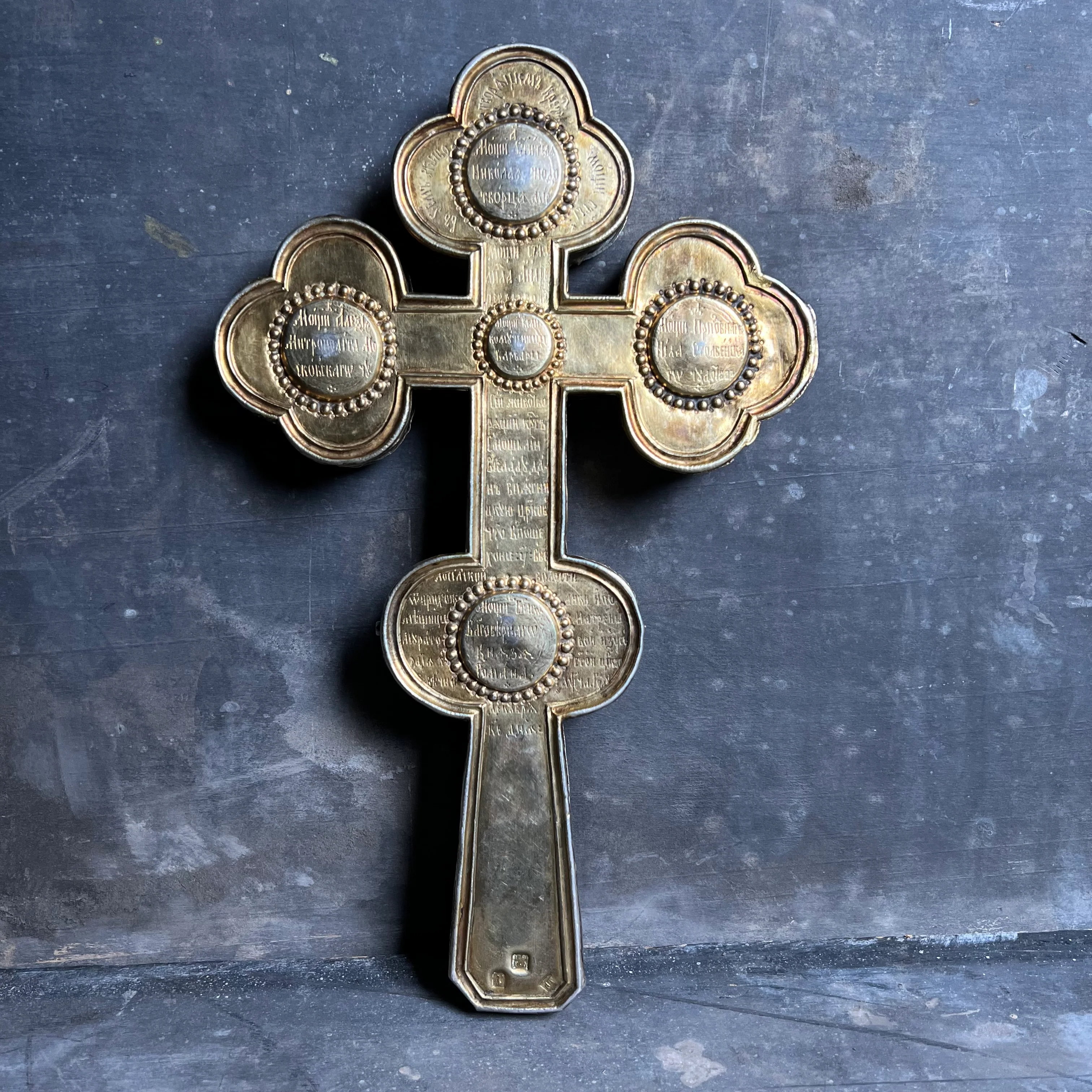
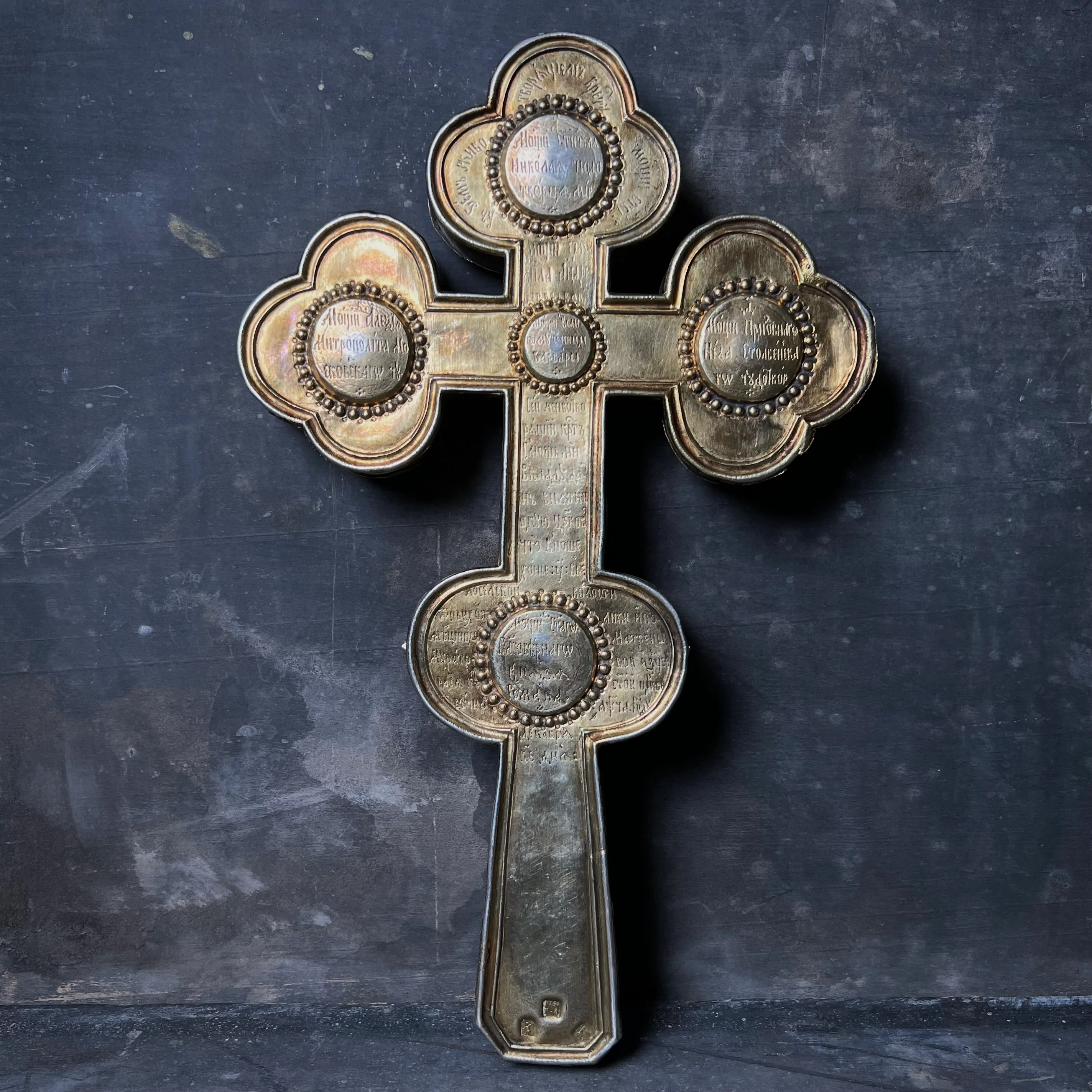
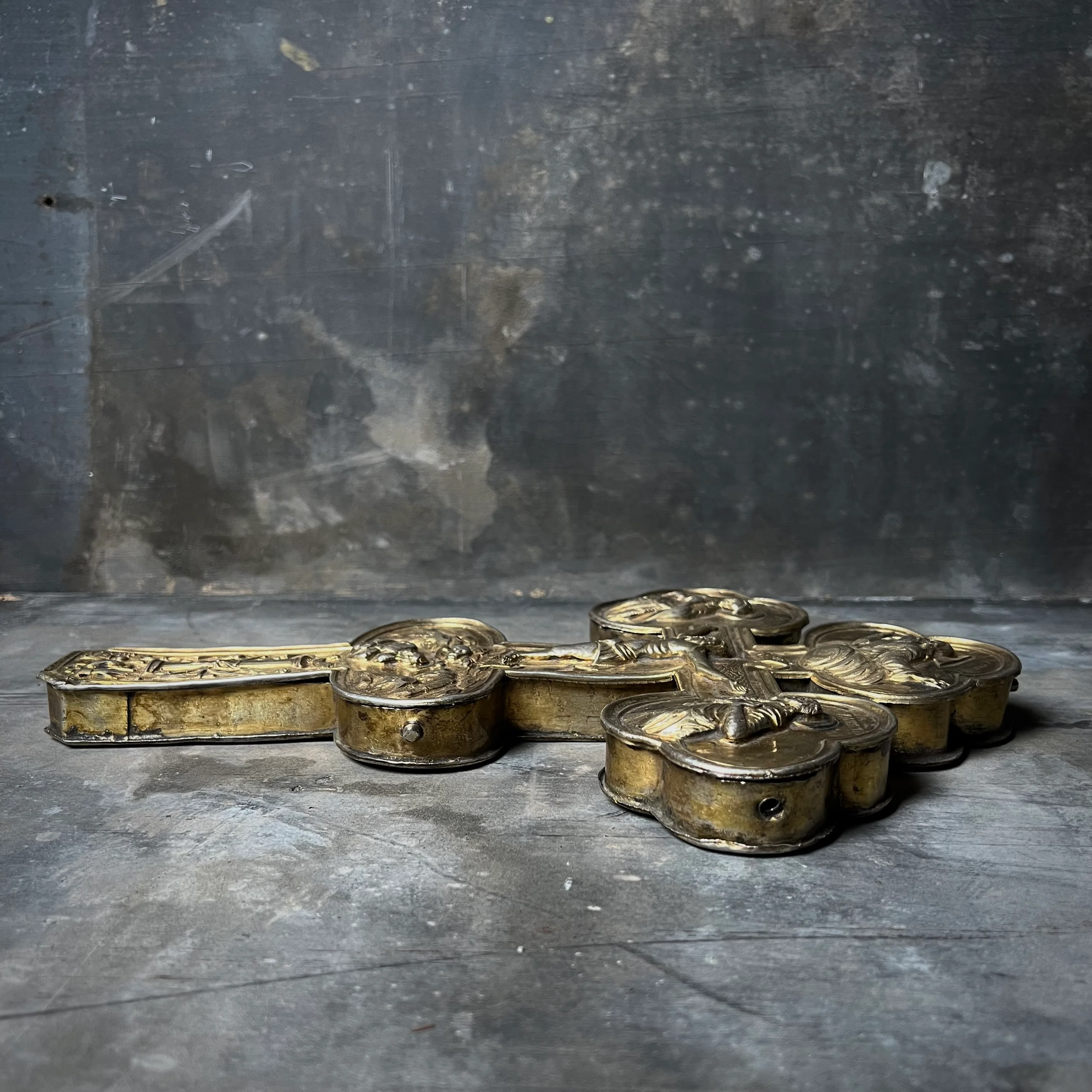
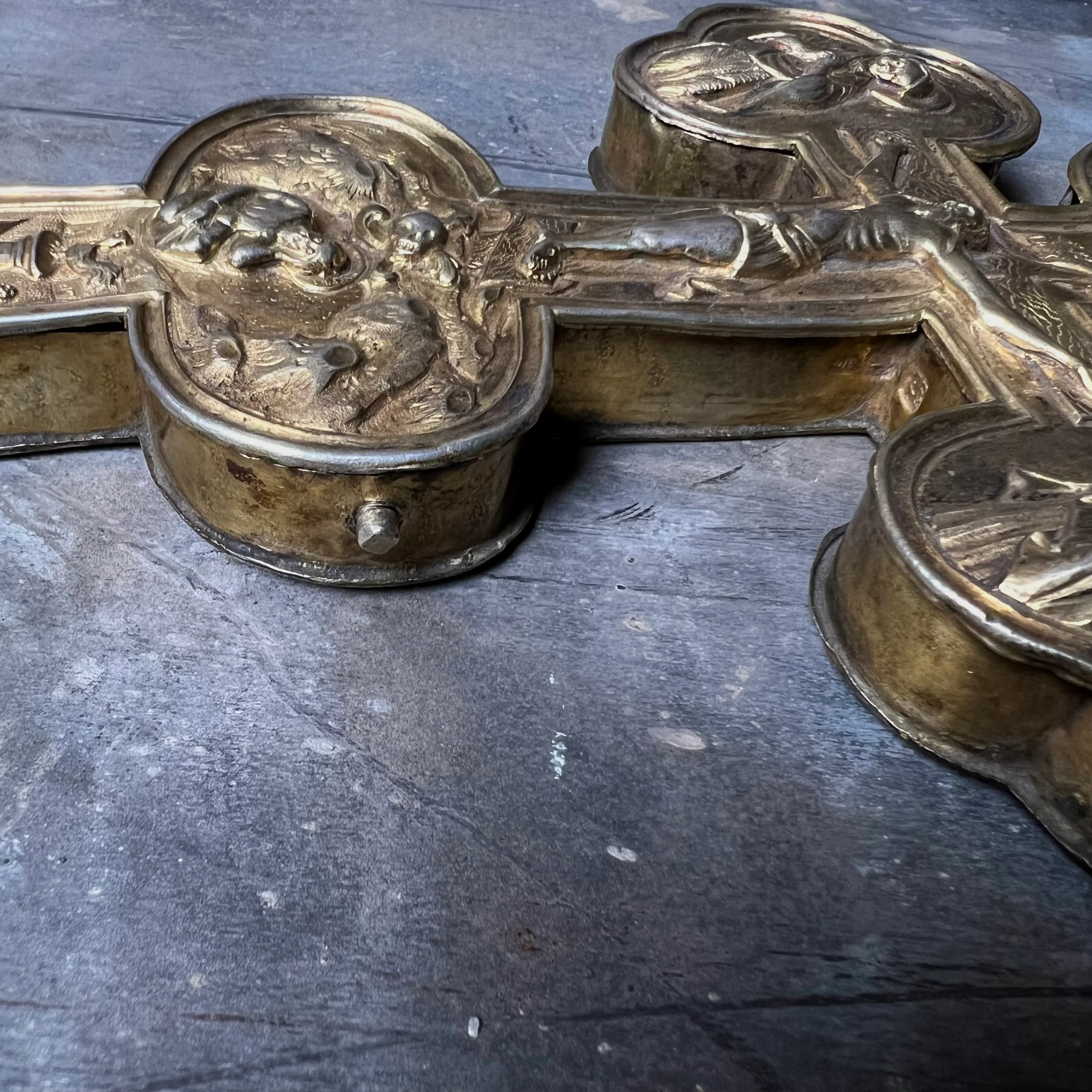
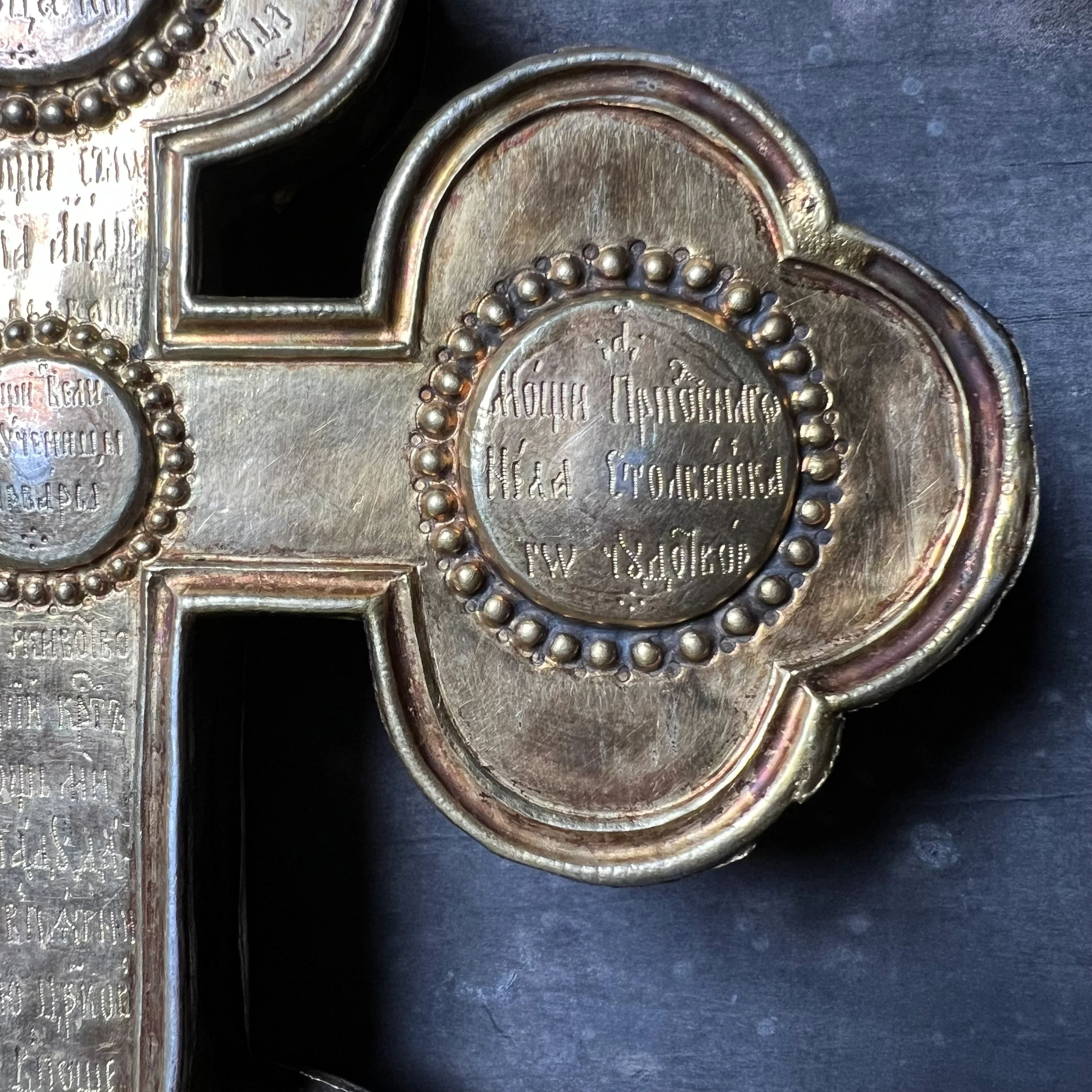
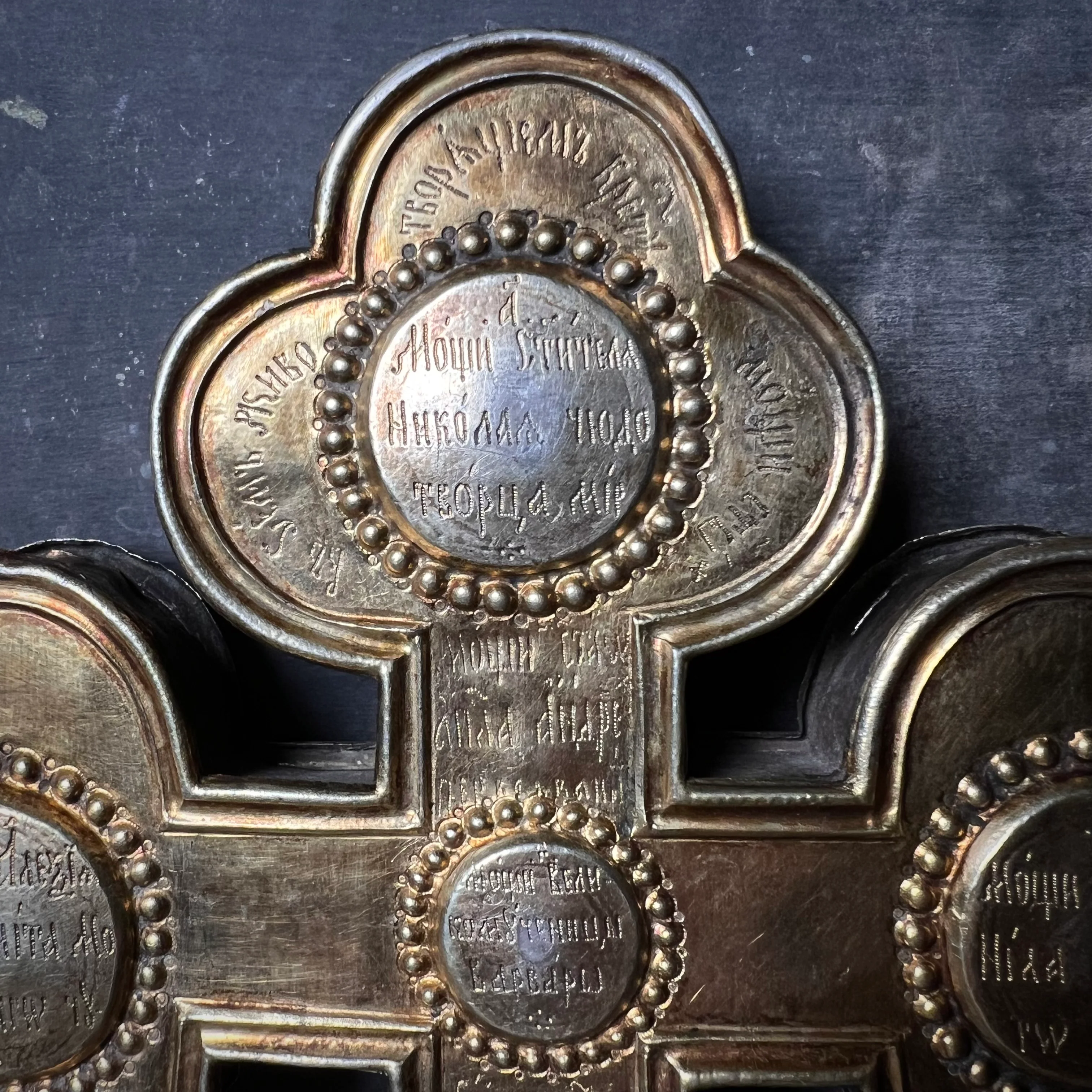
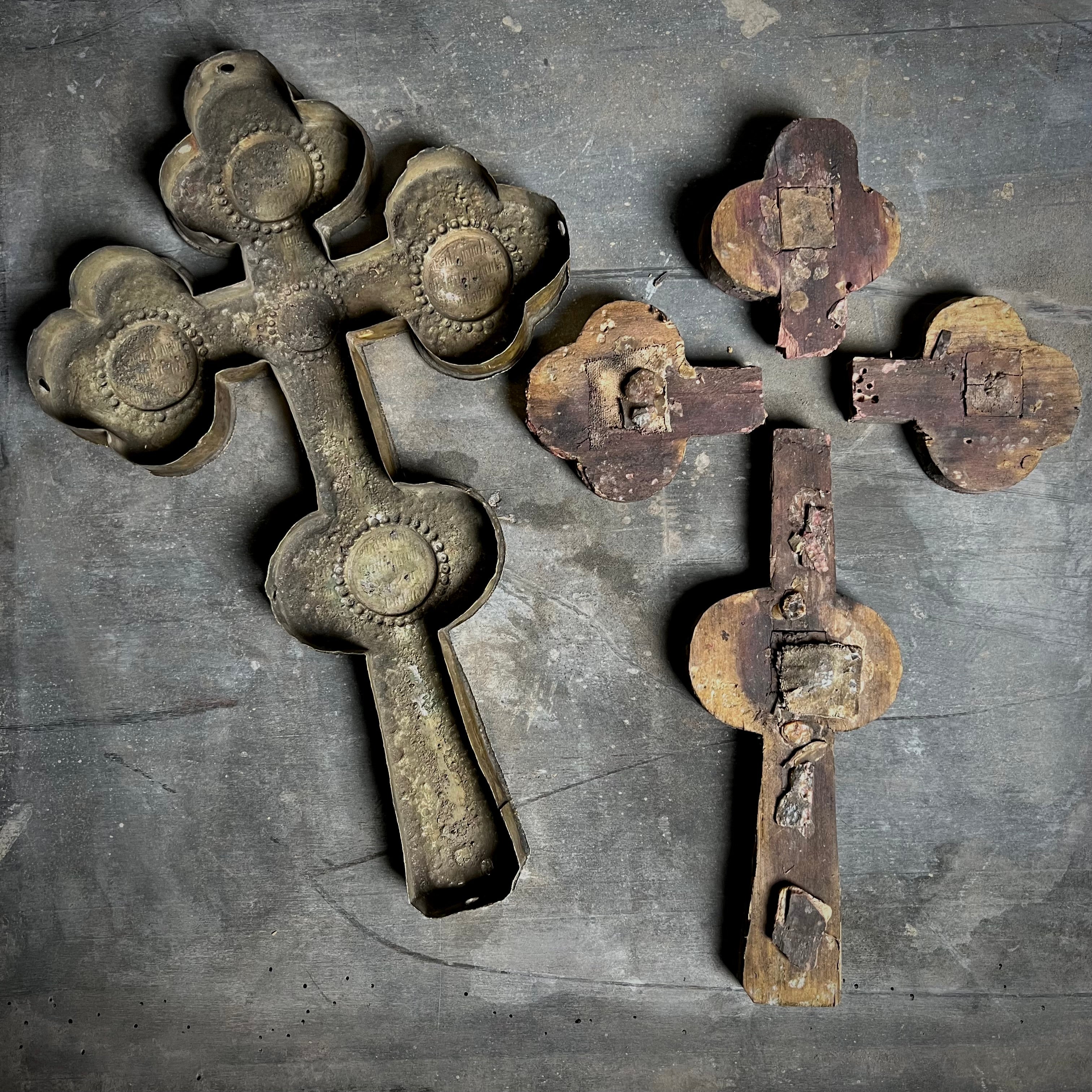
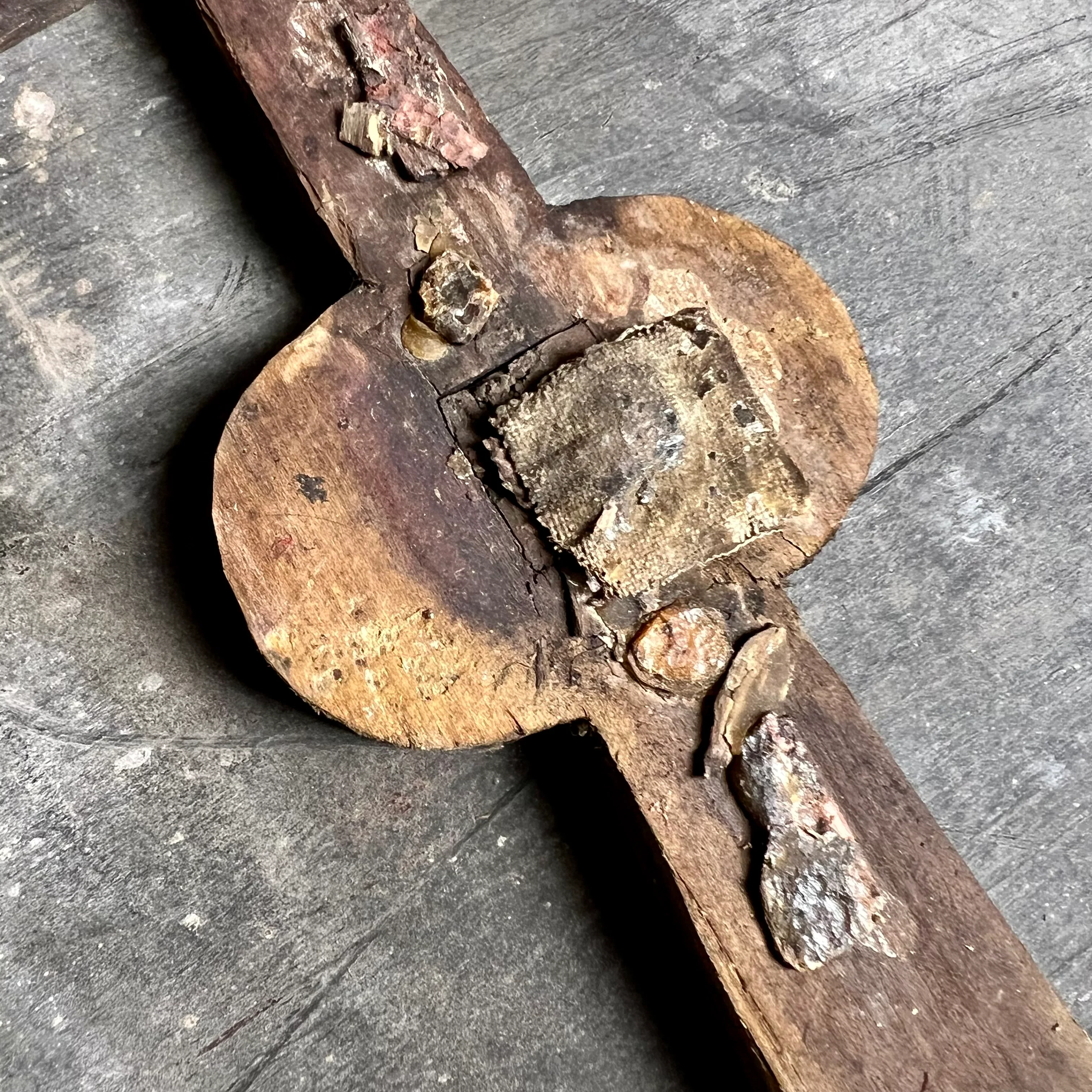
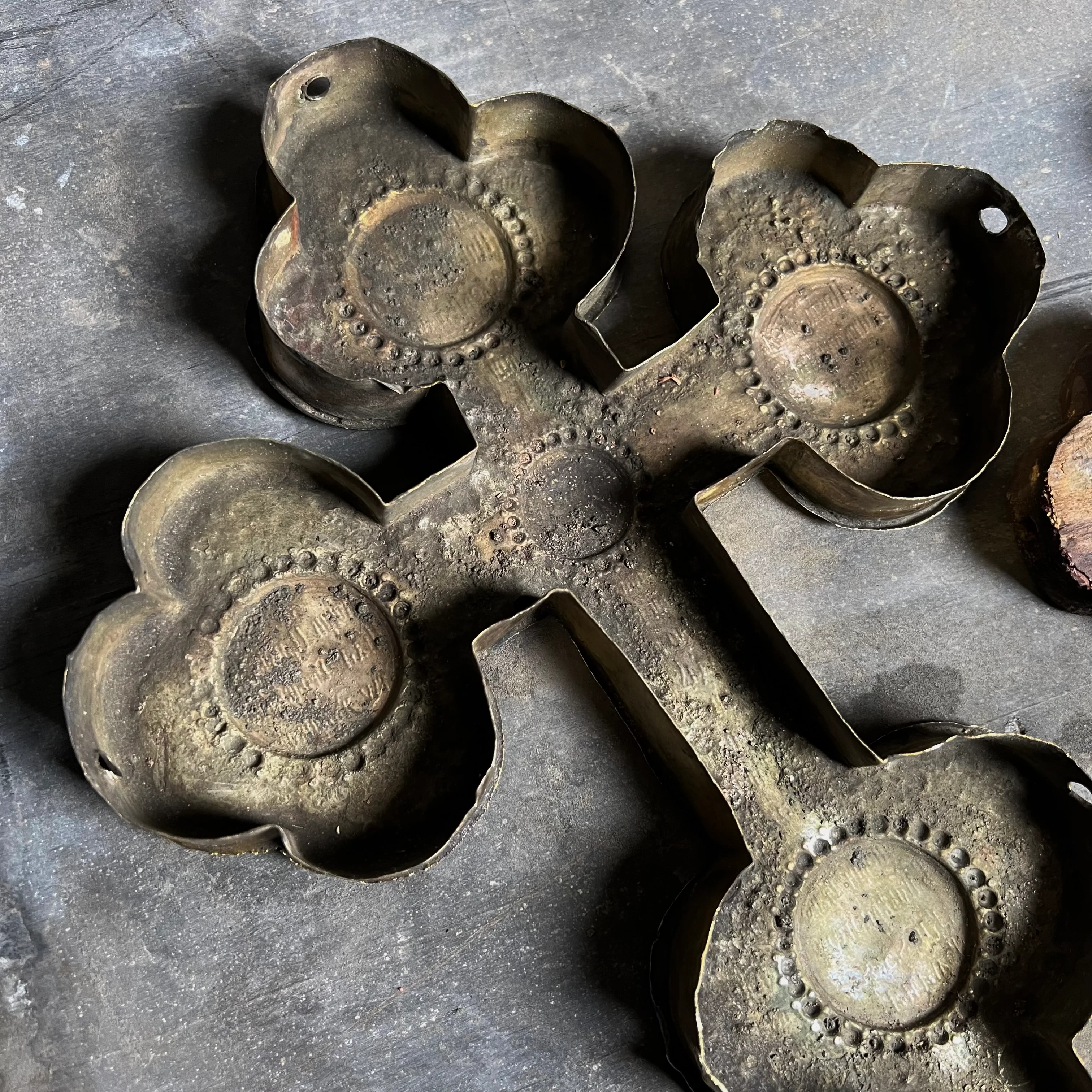
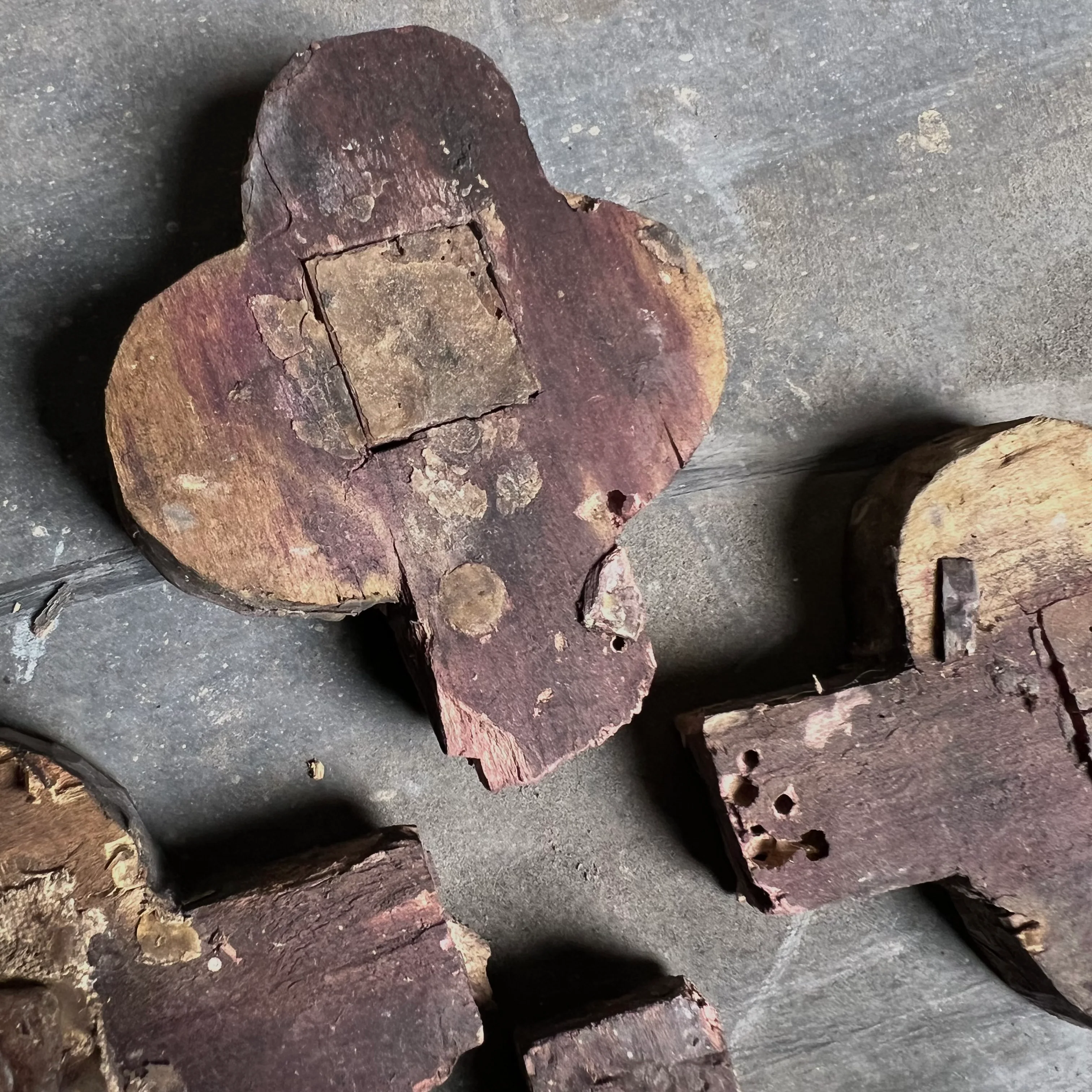
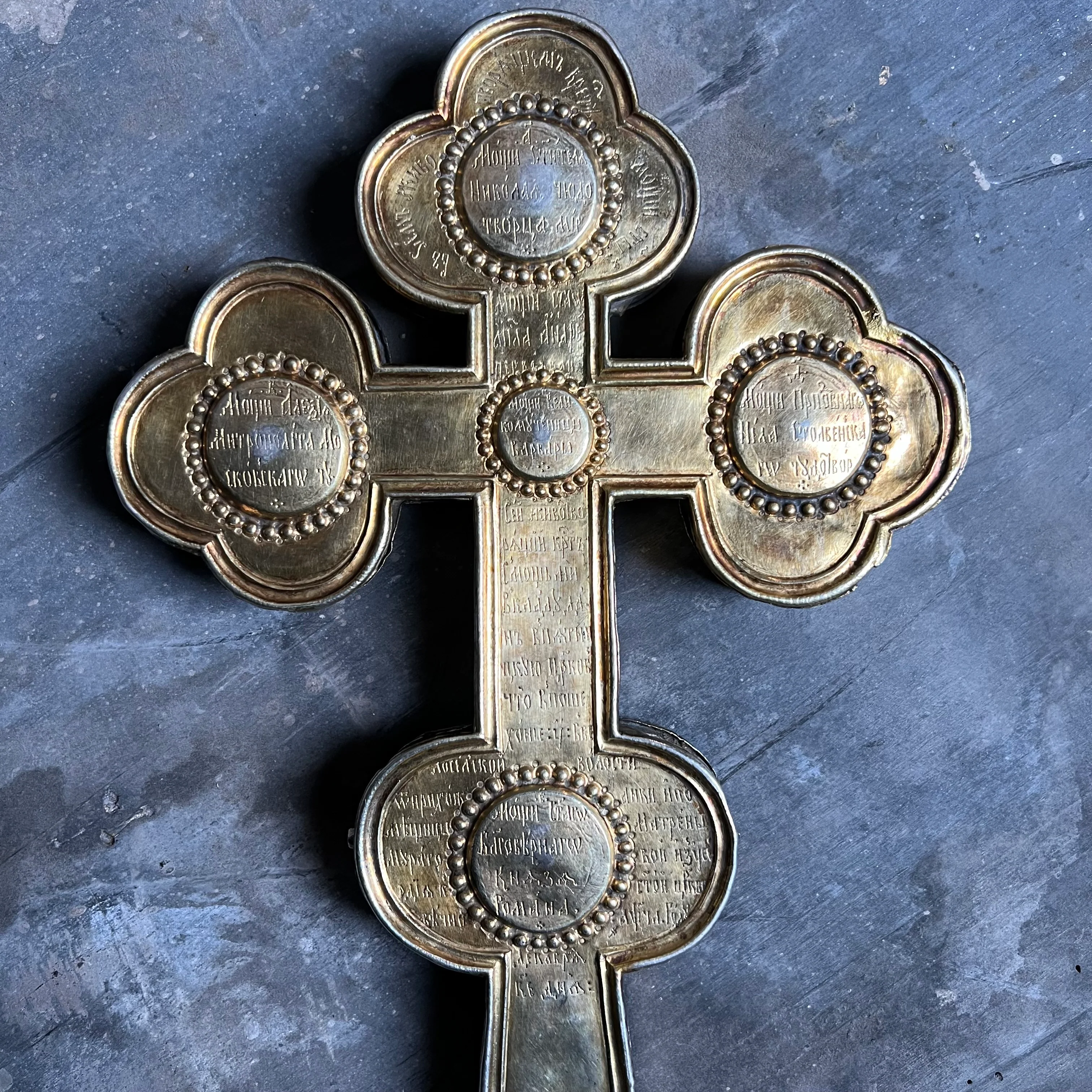
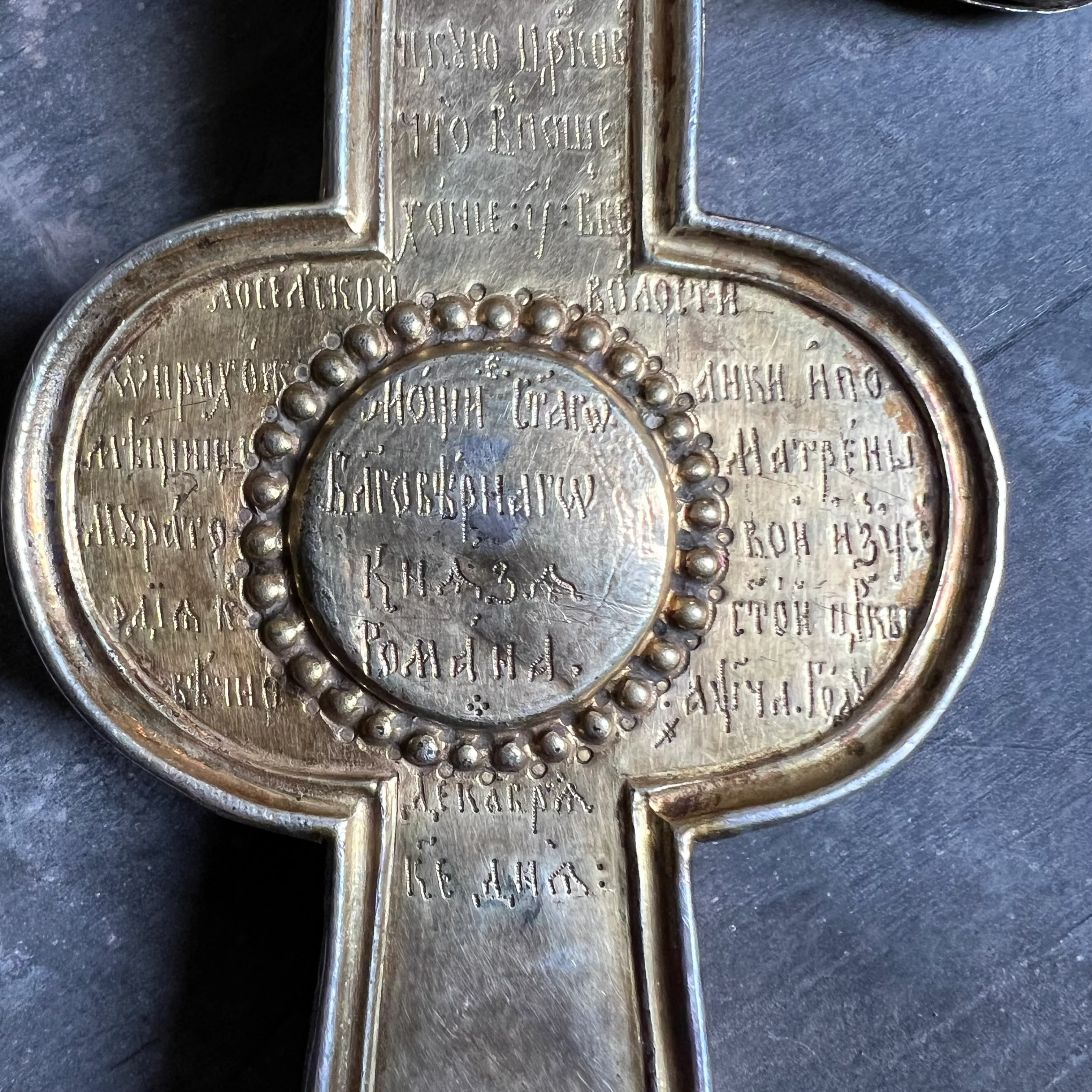
The reverse is engraved with religious text in Old Russian, providing devotional and descriptive context. Of particular importance, the cross retains its internal wooden core, to which bone and wooden relics are attached and sealed with resin — an integral aspect of its original reliquary function.
Powerful in scale, symbolism and execution, this is a rare survival of late-18th-century Russian Orthodox liturgical silver, conceived as a focal object within ecclesiastical use and devotion.
A closely related example is preserved in the collection of the Victoria and Albert Museum, accession number 1927-1898.
Product Information
Product Information
Shipping & Returns
Shipping & Returns
Russian Priests Blessing Cross d.1791
Russian Priests Blessing Cross d.1791
An exceptional Russian Orthodox priest’s blessing and reliquary cross, dated 1791, conceived on a commanding altar scale and richly worked in silver-gilt.
The cross is executed in solid 84-standard silver (zolotniki), subsequently fire-gilded, in keeping with late-18th-century Russian ecclesiastical practice. This high silver content (.875) was the prescribed Imperial standard, while the gilding served both symbolic and practical purposes: enhancing legibility of the relief in candlelit interiors, protecting the silver from handling, and visually harmonising the cross with icon frames and altar furnishings. The surviving gilding, particularly retained within the recesses of the relief, is entirely consistent with period fire-gilding and liturgical use.
At the centre is the Crucifixion, with Christ rendered in deeply modelled relief. The Madonna stands to the left, and St Mary Magdalene to the right. Above, God the Father appears within a triangular halo, symbolising the Holy Trinity. The cross is dated to the reign of Catherine II of Russia, both she and Christologically referenced figures forming part of the wider Romanov dynastic and Orthodox tradition of patronage.
Beneath Christ’s feet lies a skull, emblematic of mortality and the redemption of Adam, while below this St Peter is shown beside a cockerel, referencing the threefold denial. The lower section of the cross is densely populated with symbolic instruments of the Passion, including the Roman soldier’s sword, the spear of destiny, and a raised hand, among other signs, forming a complex visual theology intended for contemplation and blessing.
The reverse is engraved with religious text in Old Russian, providing devotional and descriptive context. Of particular importance, the cross retains its internal wooden core, to which bone and wooden relics are attached and sealed with resin — an integral aspect of its original reliquary function.
Powerful in scale, symbolism and execution, this is a rare survival of late-18th-century Russian Orthodox liturgical silver, conceived as a focal object within ecclesiastical use and devotion.
A closely related example is preserved in the collection of the Victoria and Albert Museum, accession number 1927-1898.
Original: $20,692.24
-70%$20,692.24
$6,207.67Product Information
Product Information
Shipping & Returns
Shipping & Returns
Description
An exceptional Russian Orthodox priest’s blessing and reliquary cross, dated 1791, conceived on a commanding altar scale and richly worked in silver-gilt.
The cross is executed in solid 84-standard silver (zolotniki), subsequently fire-gilded, in keeping with late-18th-century Russian ecclesiastical practice. This high silver content (.875) was the prescribed Imperial standard, while the gilding served both symbolic and practical purposes: enhancing legibility of the relief in candlelit interiors, protecting the silver from handling, and visually harmonising the cross with icon frames and altar furnishings. The surviving gilding, particularly retained within the recesses of the relief, is entirely consistent with period fire-gilding and liturgical use.
At the centre is the Crucifixion, with Christ rendered in deeply modelled relief. The Madonna stands to the left, and St Mary Magdalene to the right. Above, God the Father appears within a triangular halo, symbolising the Holy Trinity. The cross is dated to the reign of Catherine II of Russia, both she and Christologically referenced figures forming part of the wider Romanov dynastic and Orthodox tradition of patronage.
Beneath Christ’s feet lies a skull, emblematic of mortality and the redemption of Adam, while below this St Peter is shown beside a cockerel, referencing the threefold denial. The lower section of the cross is densely populated with symbolic instruments of the Passion, including the Roman soldier’s sword, the spear of destiny, and a raised hand, among other signs, forming a complex visual theology intended for contemplation and blessing.
The reverse is engraved with religious text in Old Russian, providing devotional and descriptive context. Of particular importance, the cross retains its internal wooden core, to which bone and wooden relics are attached and sealed with resin — an integral aspect of its original reliquary function.
Powerful in scale, symbolism and execution, this is a rare survival of late-18th-century Russian Orthodox liturgical silver, conceived as a focal object within ecclesiastical use and devotion.
A closely related example is preserved in the collection of the Victoria and Albert Museum, accession number 1927-1898.