Italian Baroque Carved Limewood Cherub or Angel Carving with Acanthus Scrolls, c.1680–1720
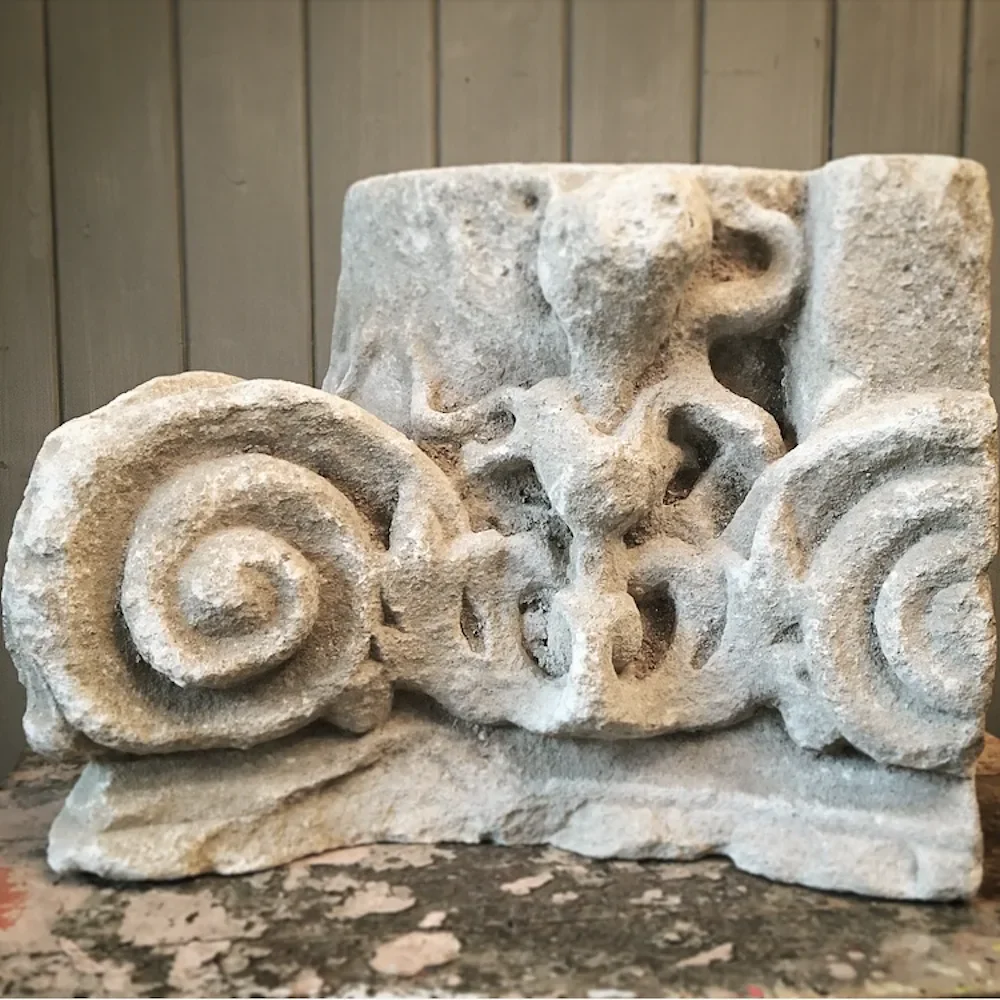
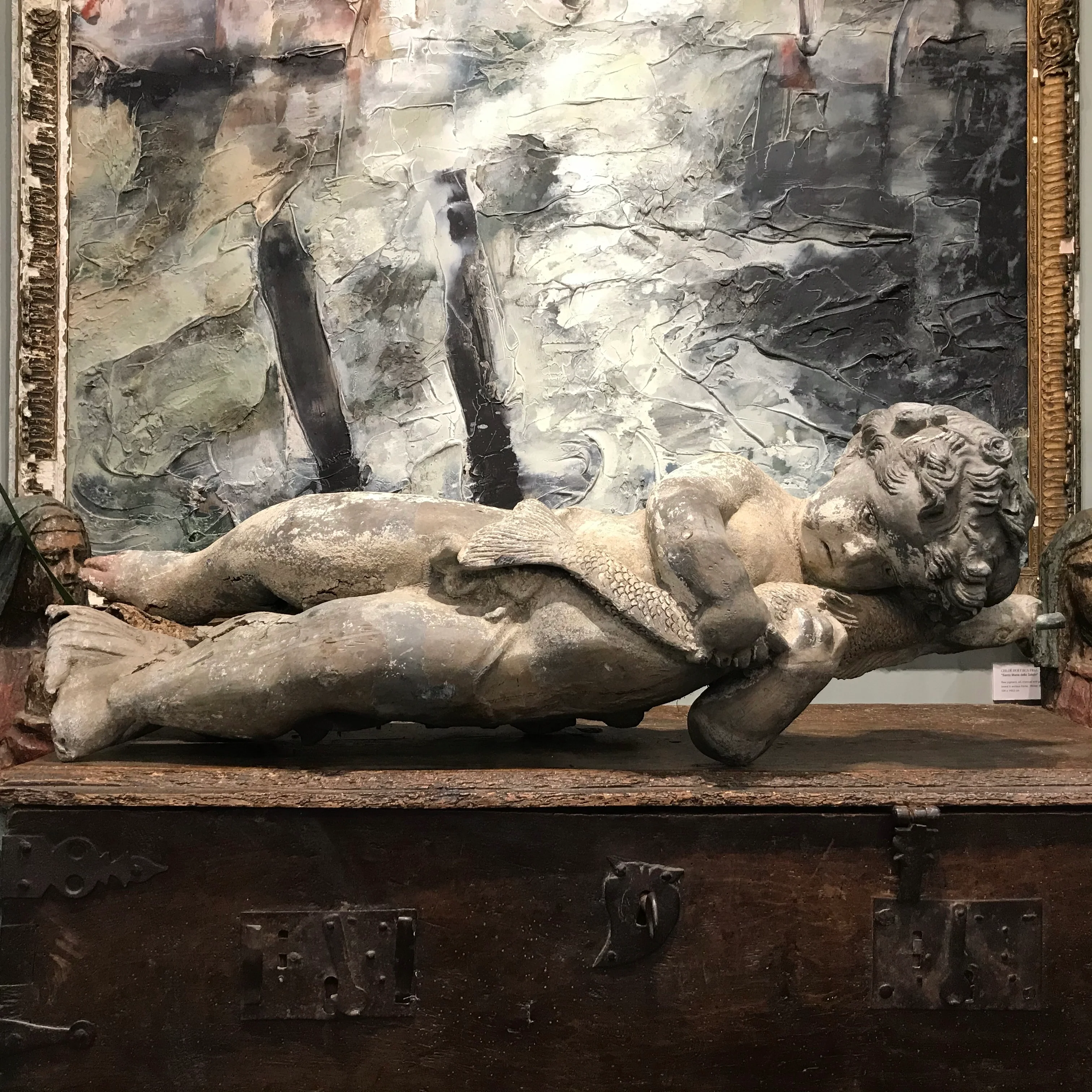
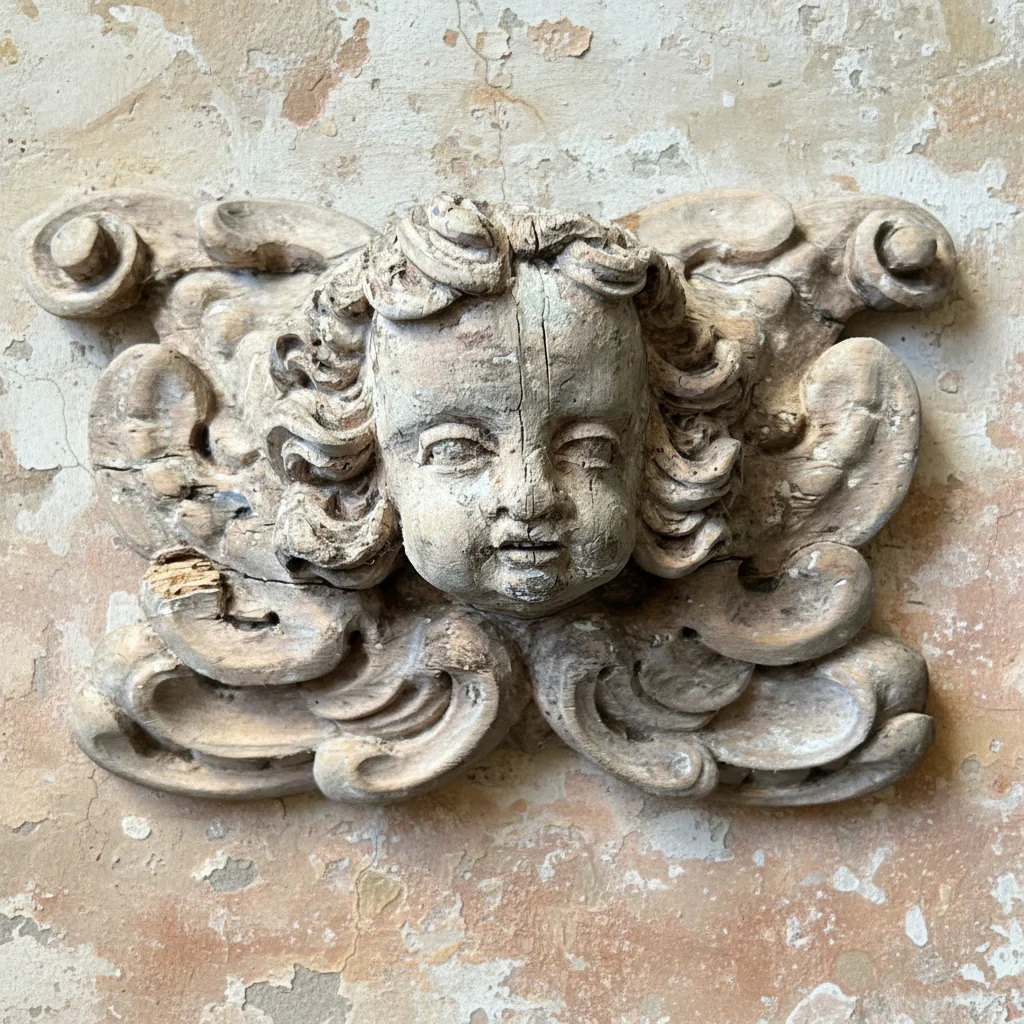
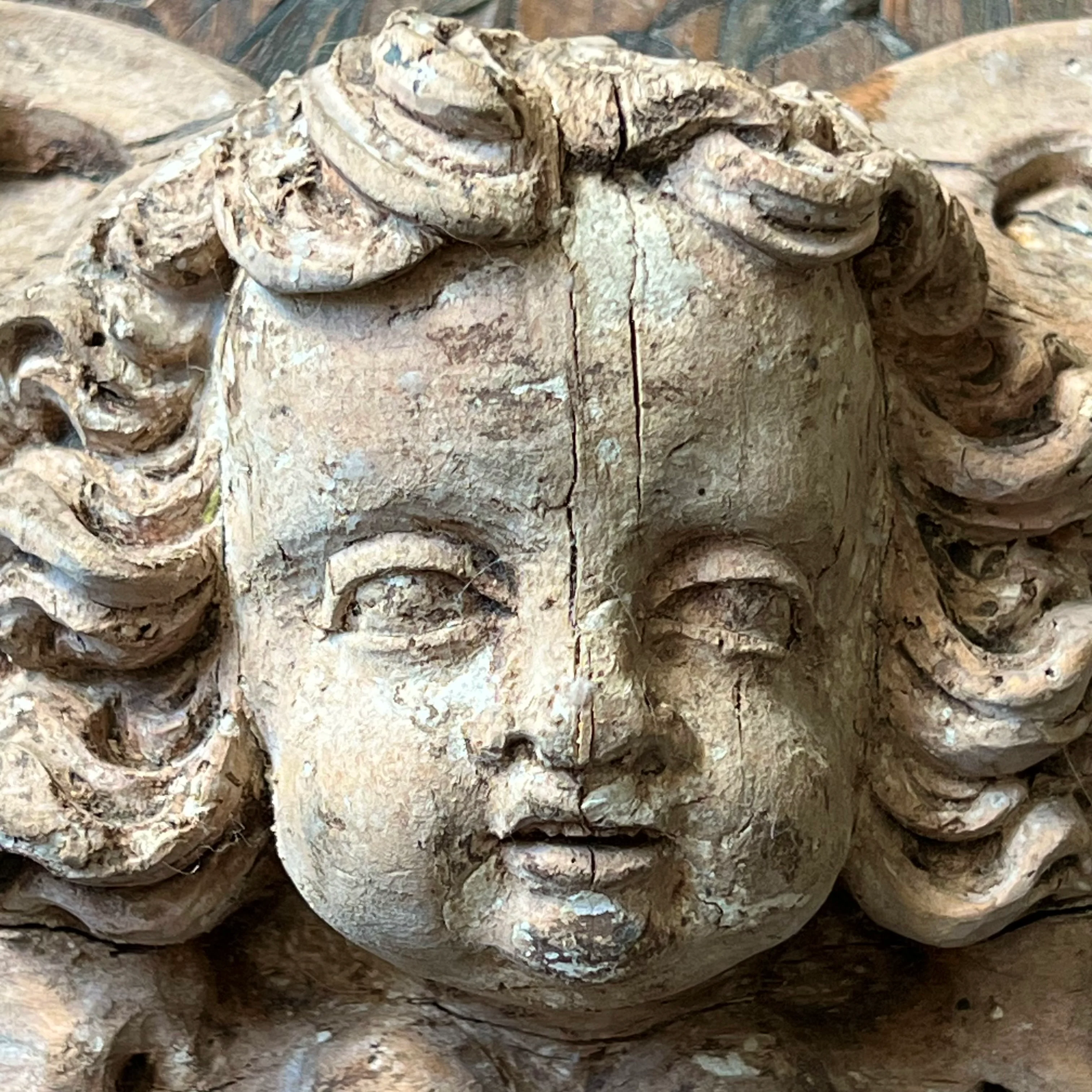
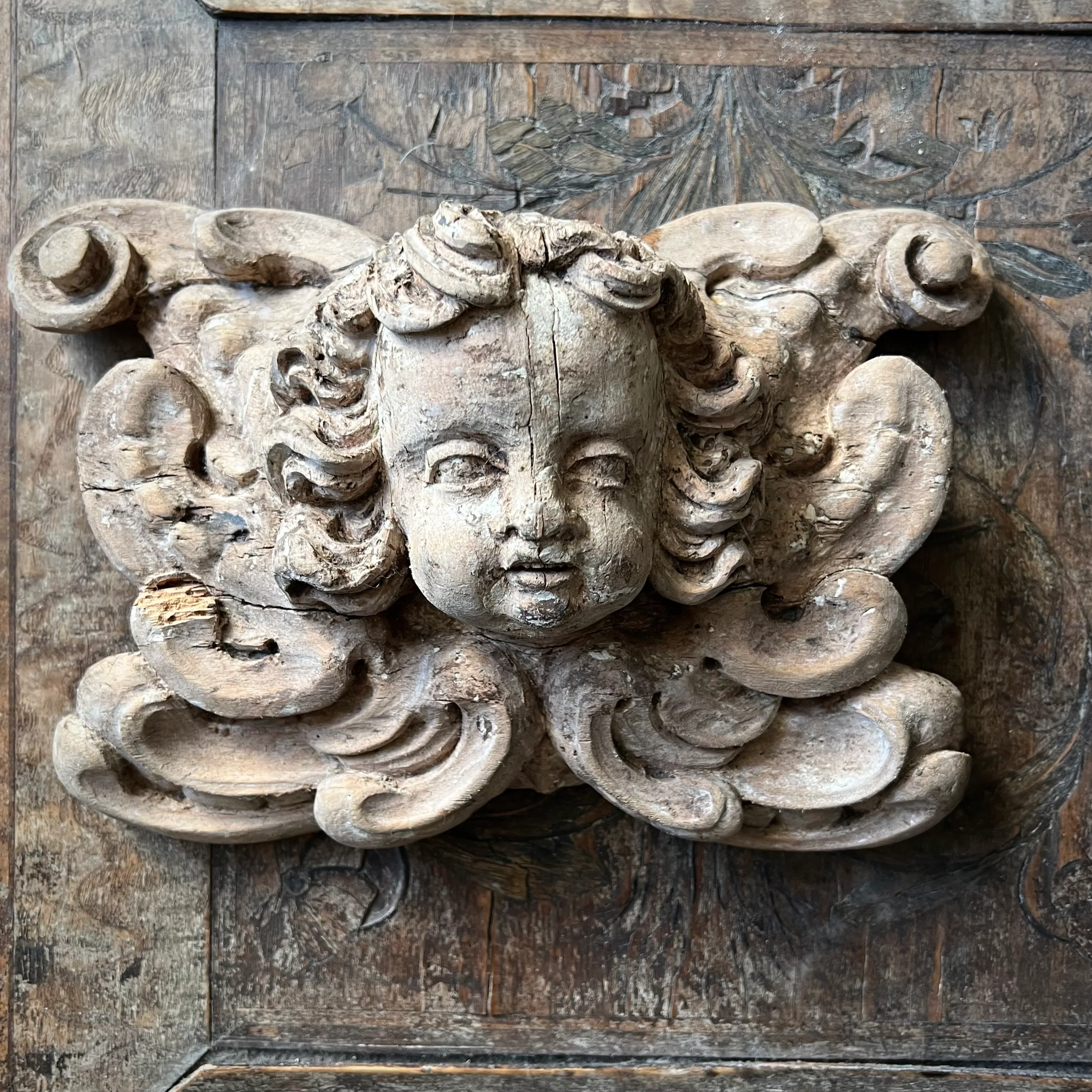
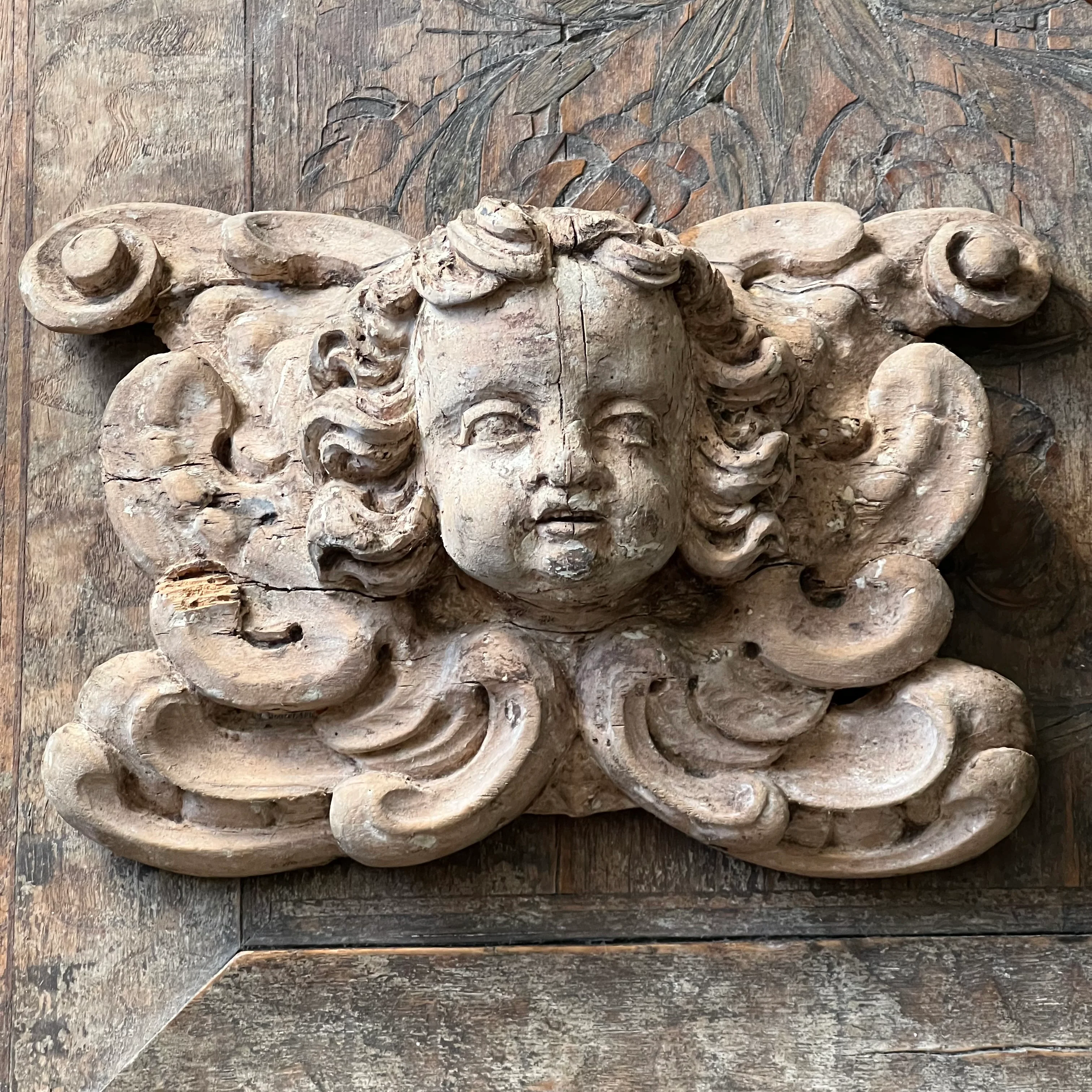
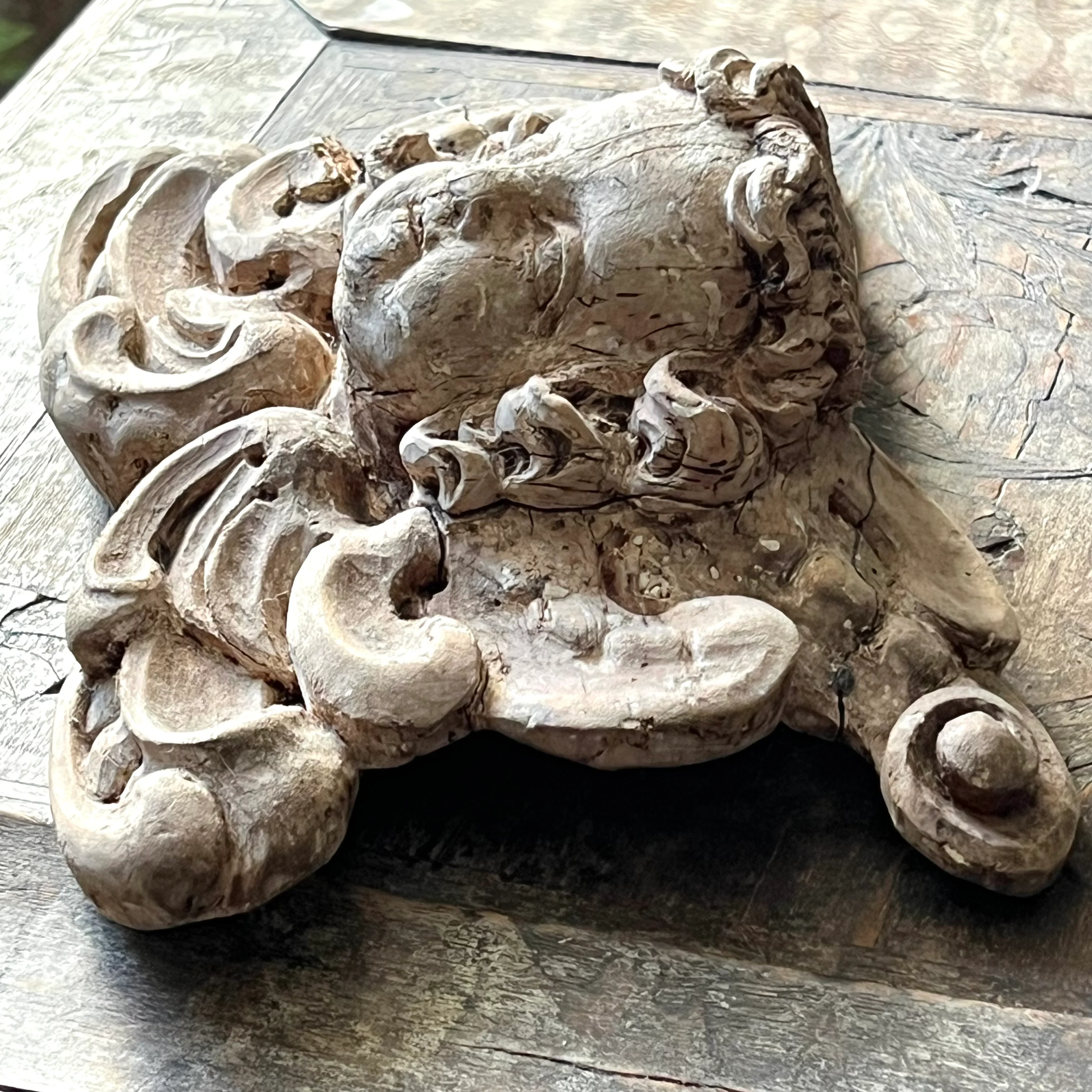
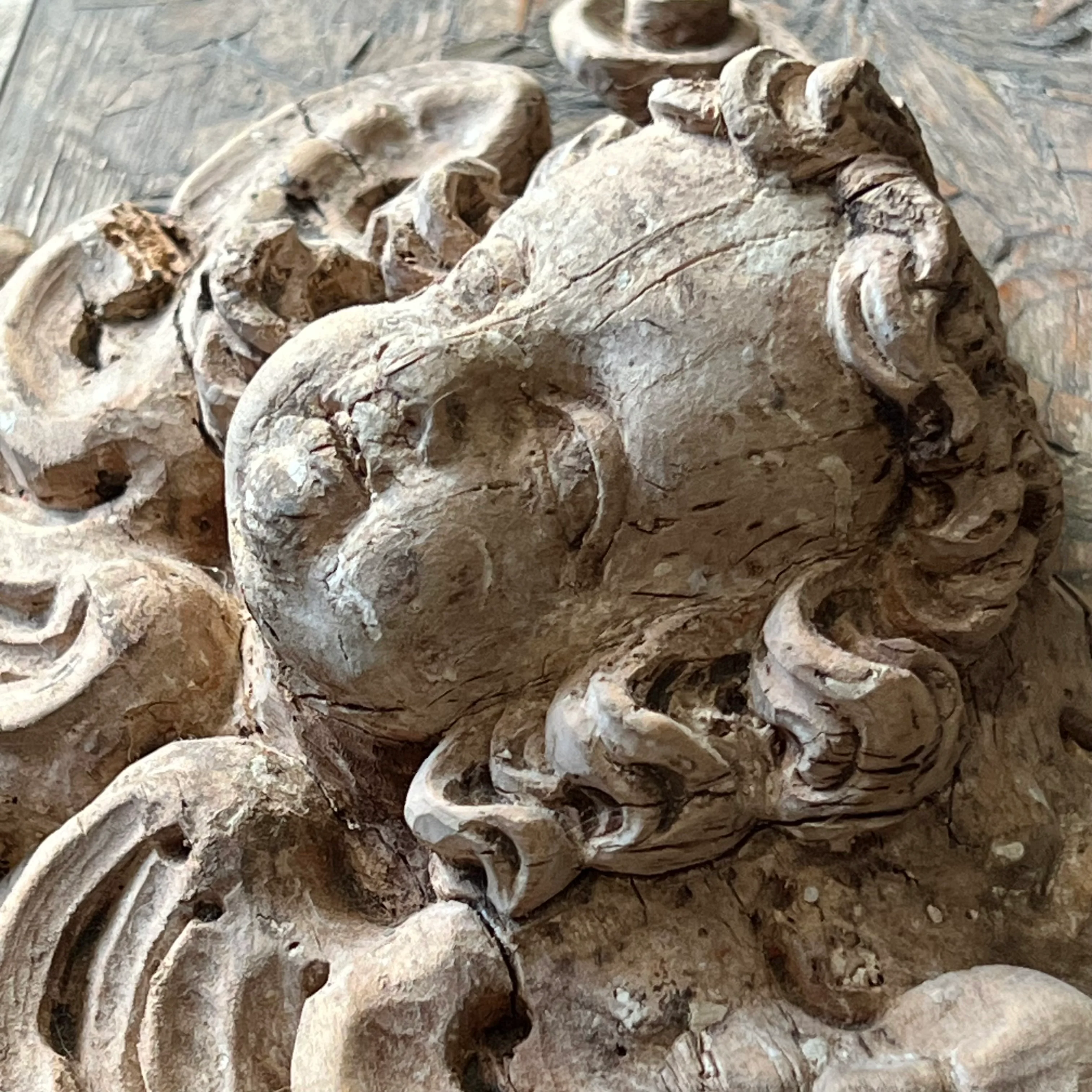
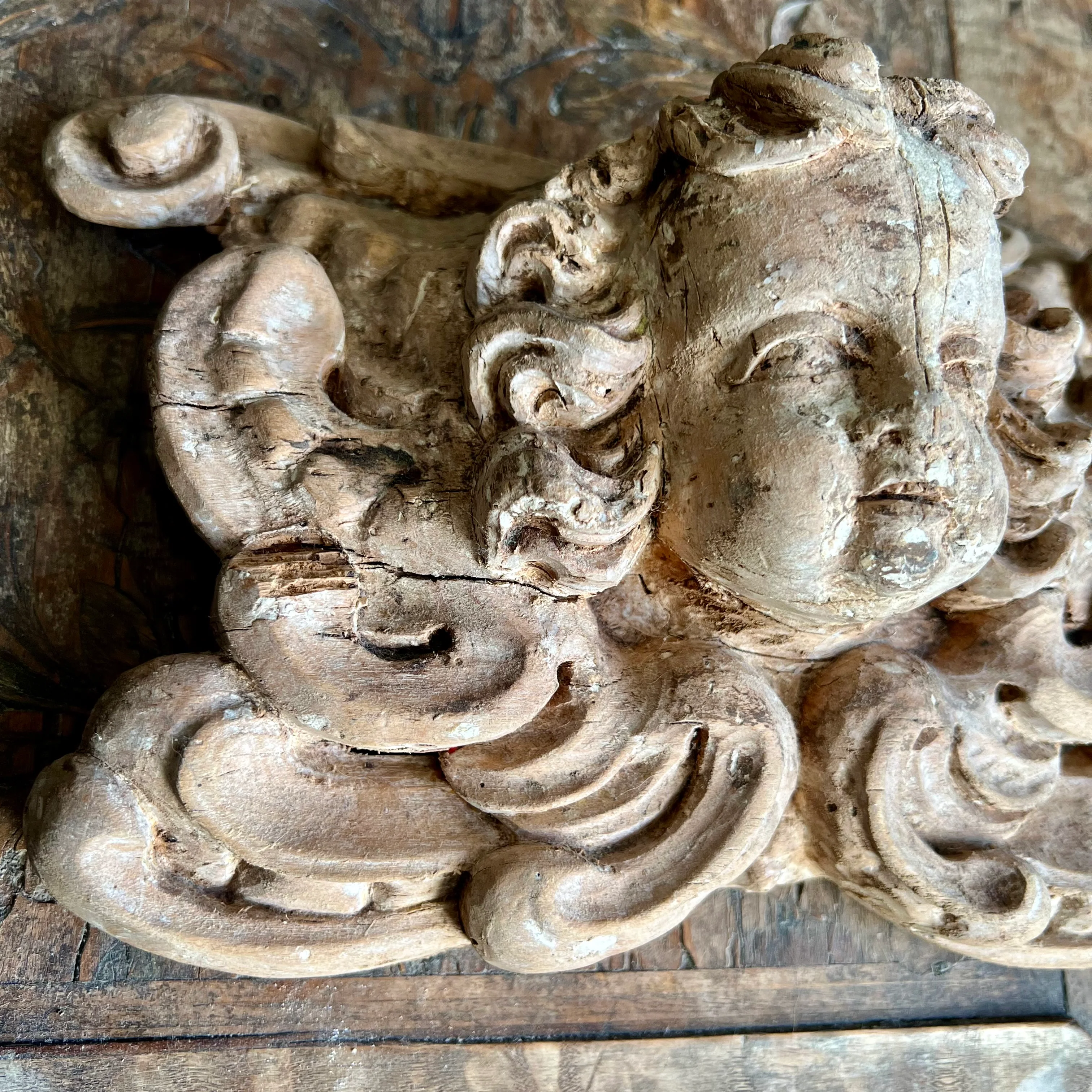
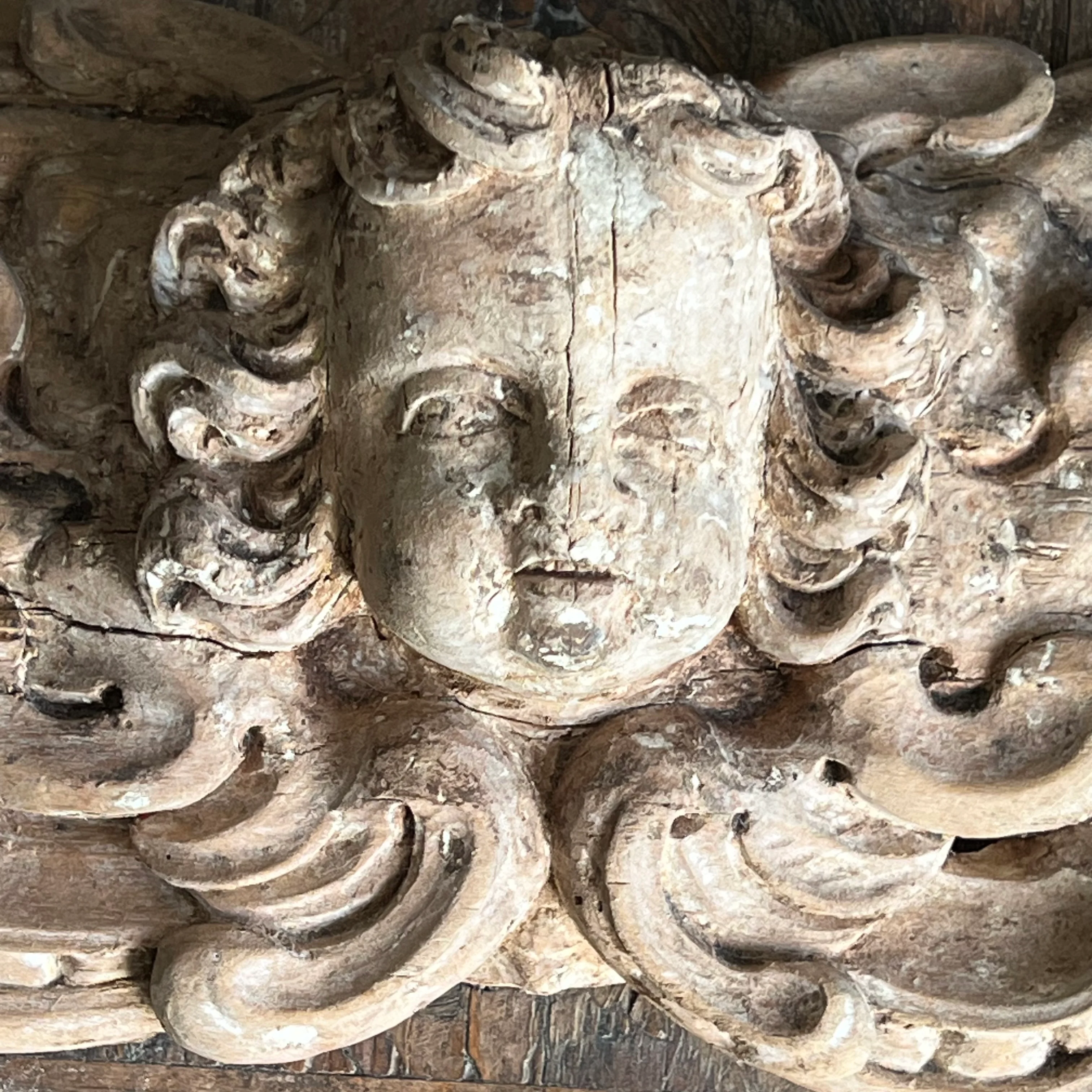
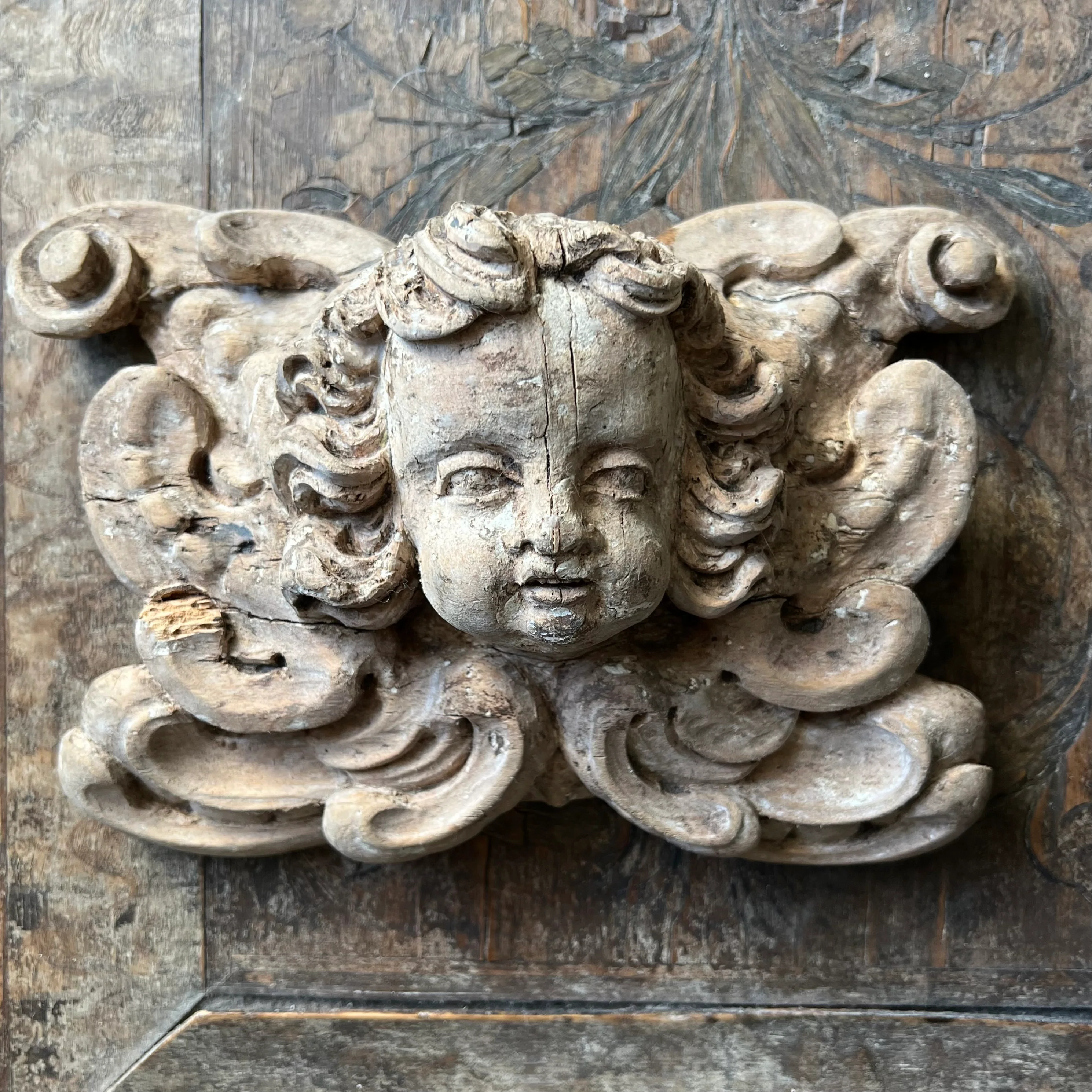
A beautifully carved Italian Baroque cherub or angel emerging from bold acanthus scrolls, executed in limewood and retaining traces of its original gesso ground. Italian, circa 1680–1720.
The expressive putto is framed by deeply cut Baroque foliage, a motif widely used in ecclesiastical wood carving where cherub and angel figures animated the architectural ornament of altarpieces, tabernacles and frames.
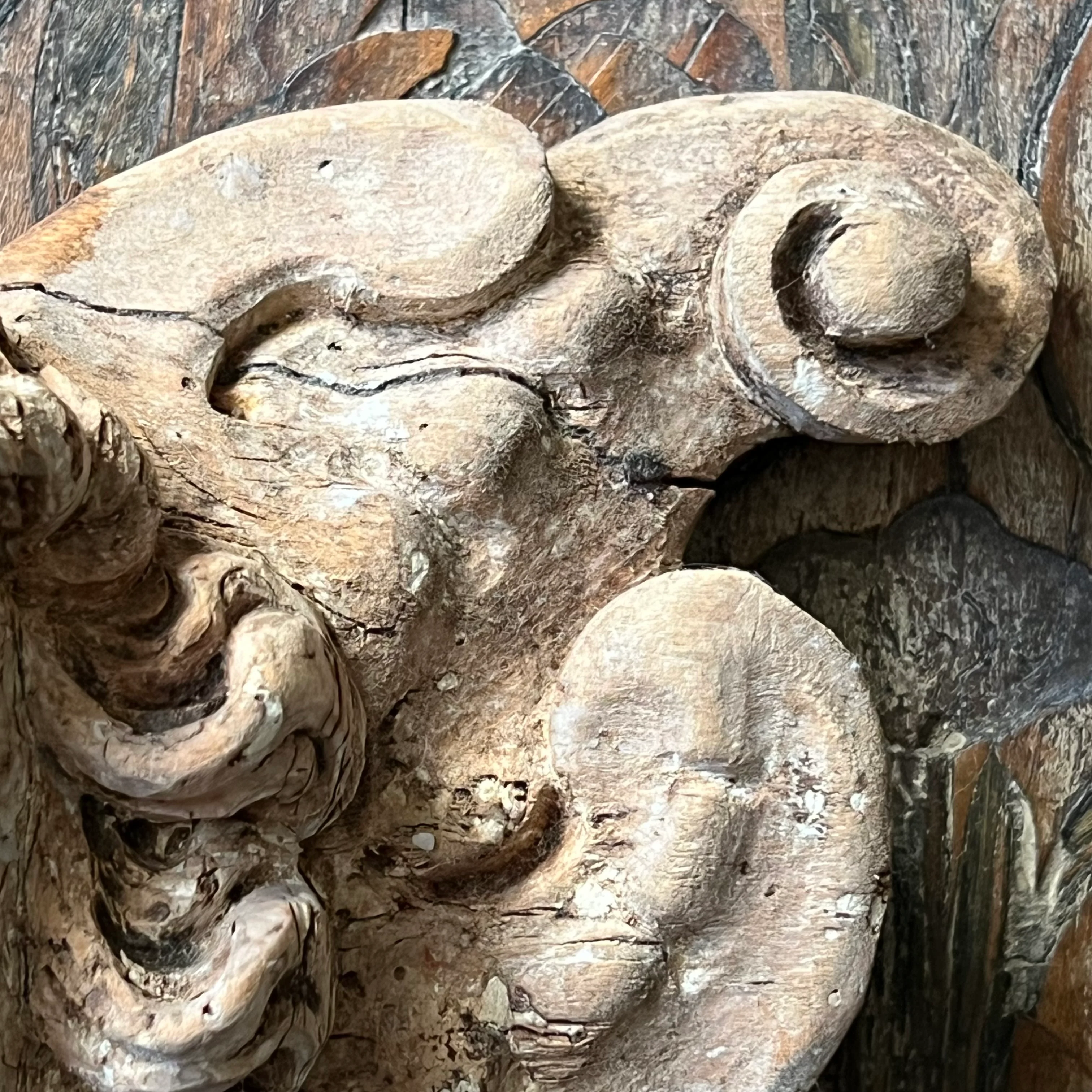
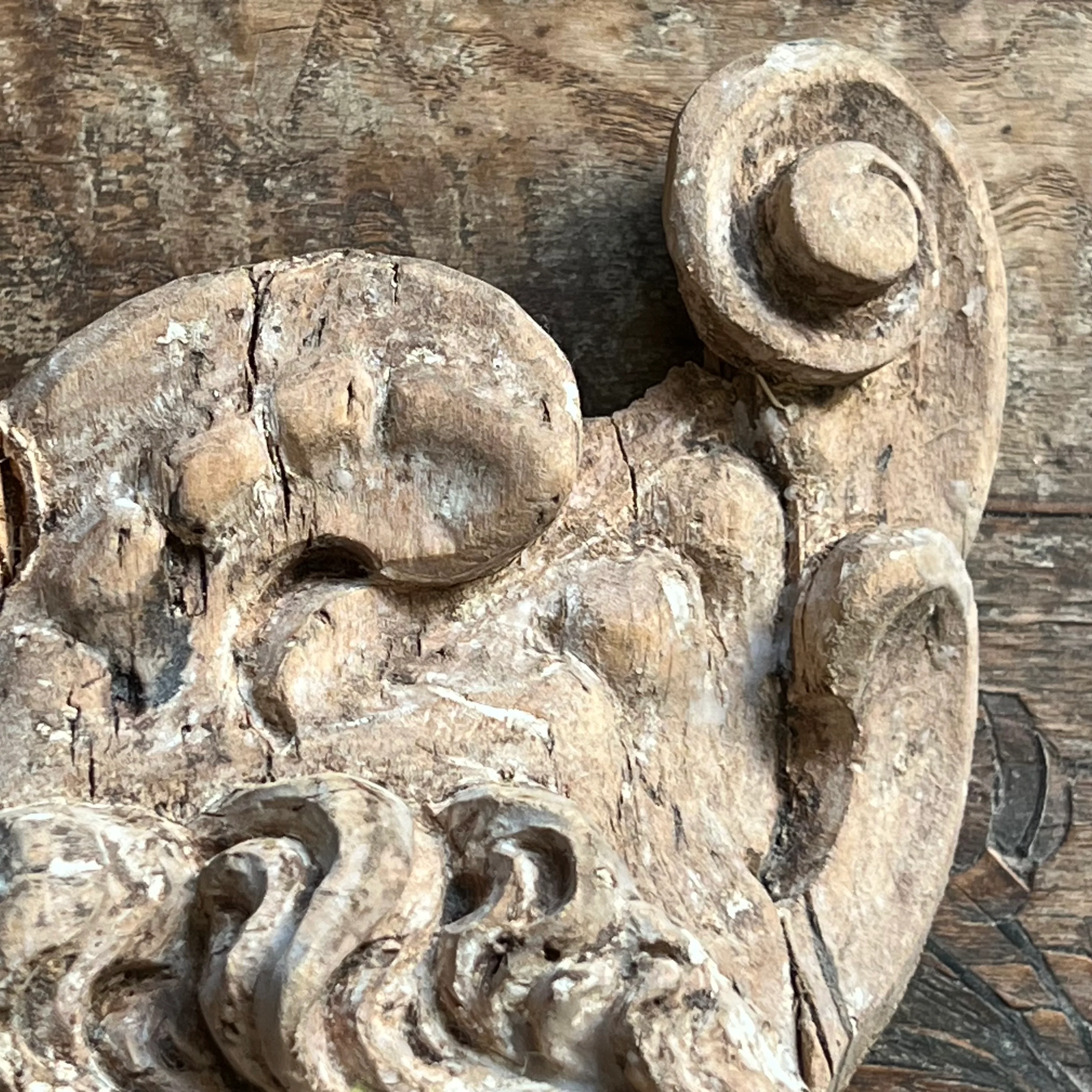
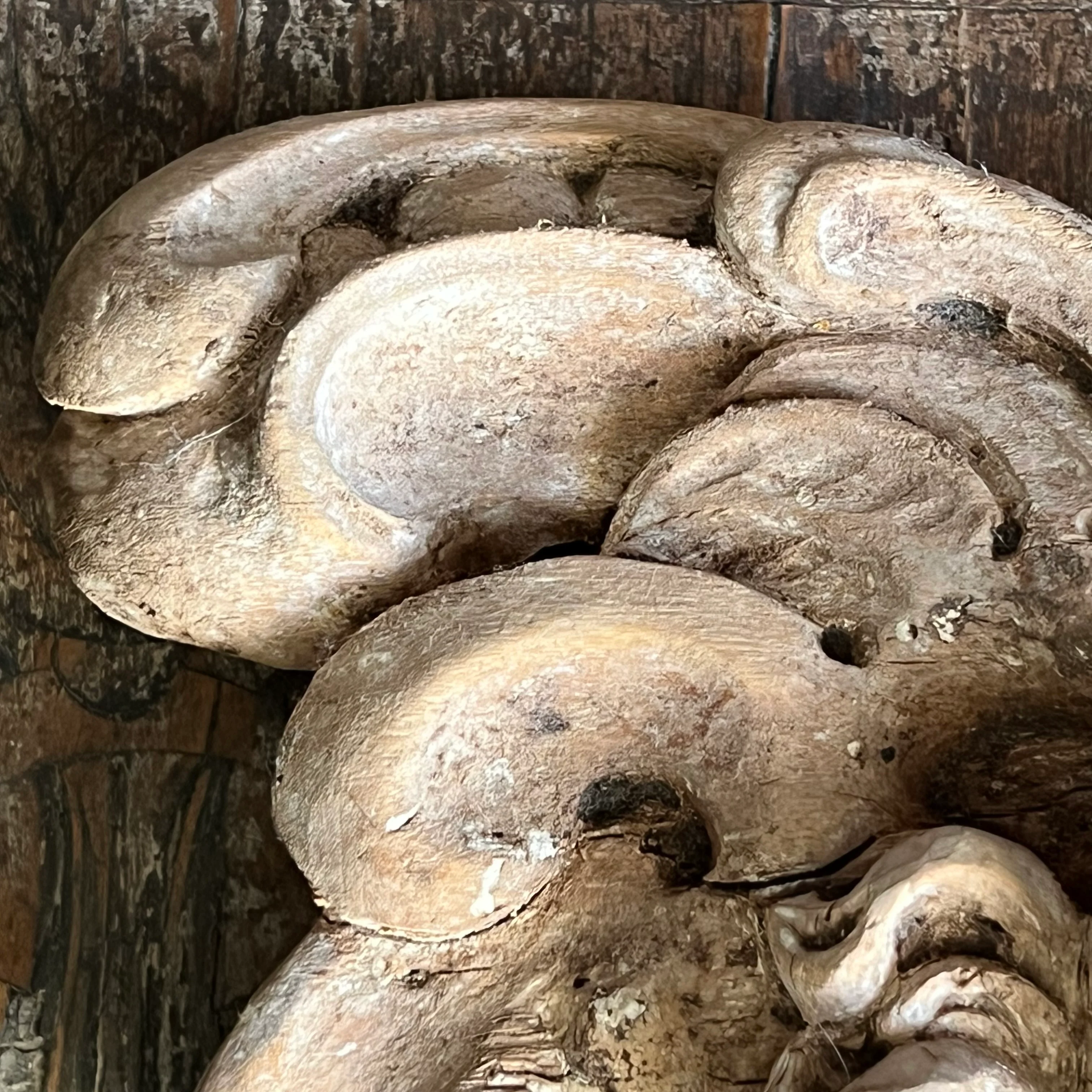
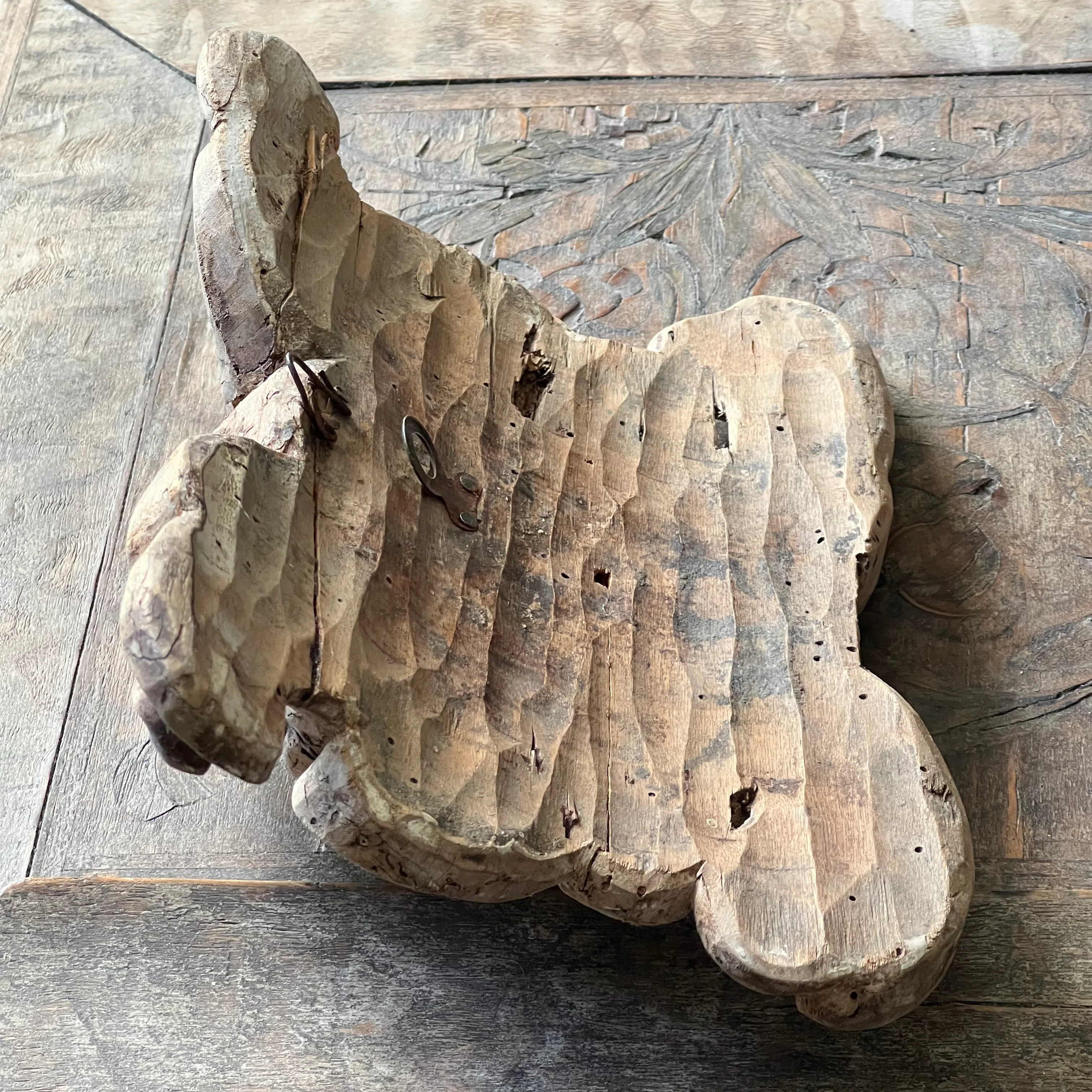
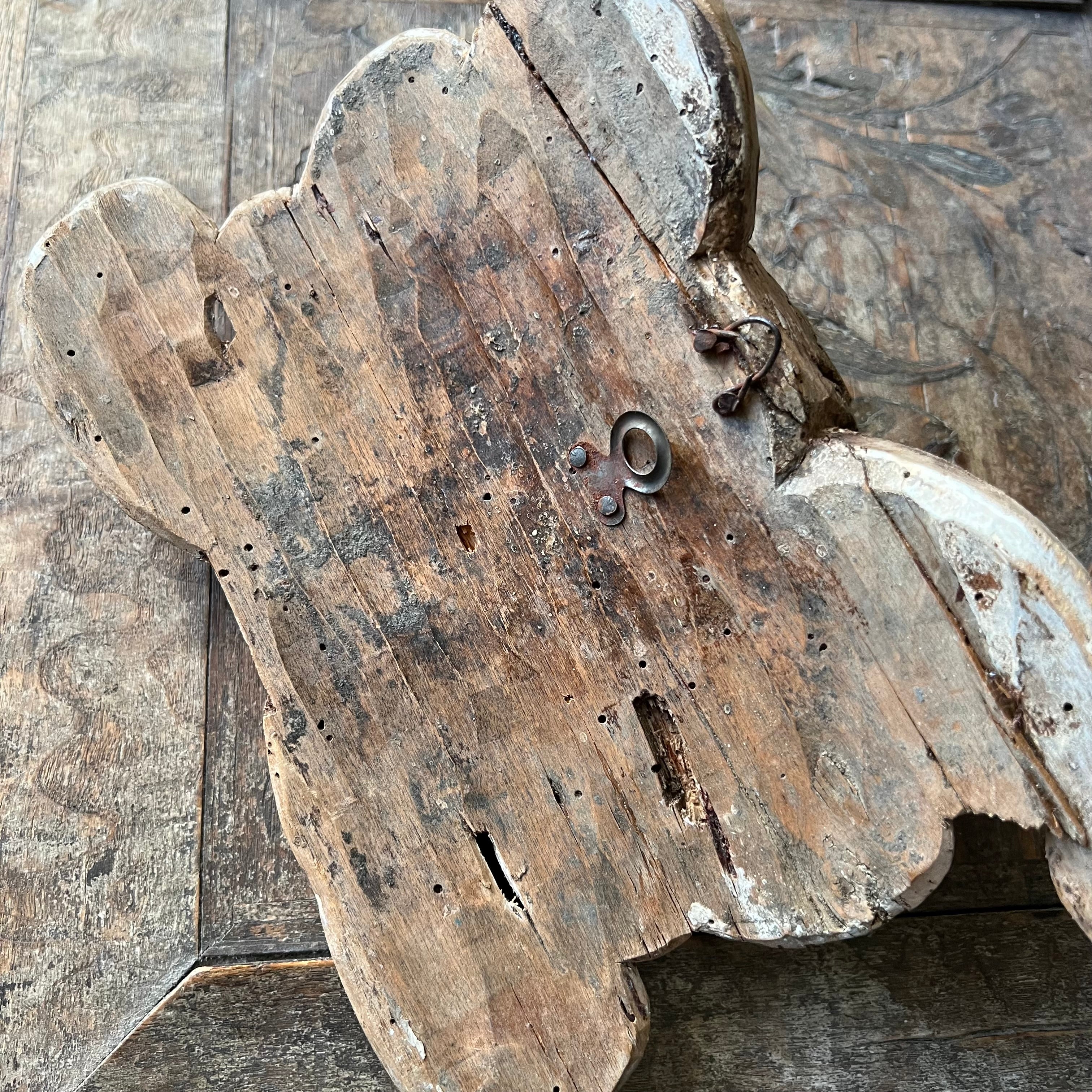
Traces of the original gesso remain within the recesses, evidence that the carving was once prepared for gilding or polychrome decoration. The reverse retains clear hand tooling and a gentle curvature, suggesting the piece was originally fixed to a curved architectural element such as an altar column or frame within a larger Baroque structure.
With historical repair.
Product Information
Product Information
Shipping & Returns
Shipping & Returns
Italian Baroque Carved Limewood Cherub or Angel Carving with Acanthus Scrolls, c.1680–1720
Italian Baroque Carved Limewood Cherub or Angel Carving with Acanthus Scrolls, c.1680–1720
A beautifully carved Italian Baroque cherub or angel emerging from bold acanthus scrolls, executed in limewood and retaining traces of its original gesso ground. Italian, circa 1680–1720.
The expressive putto is framed by deeply cut Baroque foliage, a motif widely used in ecclesiastical wood carving where cherub and angel figures animated the architectural ornament of altarpieces, tabernacles and frames.
Traces of the original gesso remain within the recesses, evidence that the carving was once prepared for gilding or polychrome decoration. The reverse retains clear hand tooling and a gentle curvature, suggesting the piece was originally fixed to a curved architectural element such as an altar column or frame within a larger Baroque structure.
With historical repair.
Product Information
Product Information
Shipping & Returns
Shipping & Returns
Description
A beautifully carved Italian Baroque cherub or angel emerging from bold acanthus scrolls, executed in limewood and retaining traces of its original gesso ground. Italian, circa 1680–1720.
The expressive putto is framed by deeply cut Baroque foliage, a motif widely used in ecclesiastical wood carving where cherub and angel figures animated the architectural ornament of altarpieces, tabernacles and frames.
Traces of the original gesso remain within the recesses, evidence that the carving was once prepared for gilding or polychrome decoration. The reverse retains clear hand tooling and a gentle curvature, suggesting the piece was originally fixed to a curved architectural element such as an altar column or frame within a larger Baroque structure.
With historical repair.